
Available on iOS & Android
Read BTC Anywhere
Carry the full magazine experience in your pocket — stories, podcasts, exclusive perks, and more. Download the free app today.
Carry the full magazine experience in your pocket — stories, podcasts, exclusive perks, and more. Download the free app today.
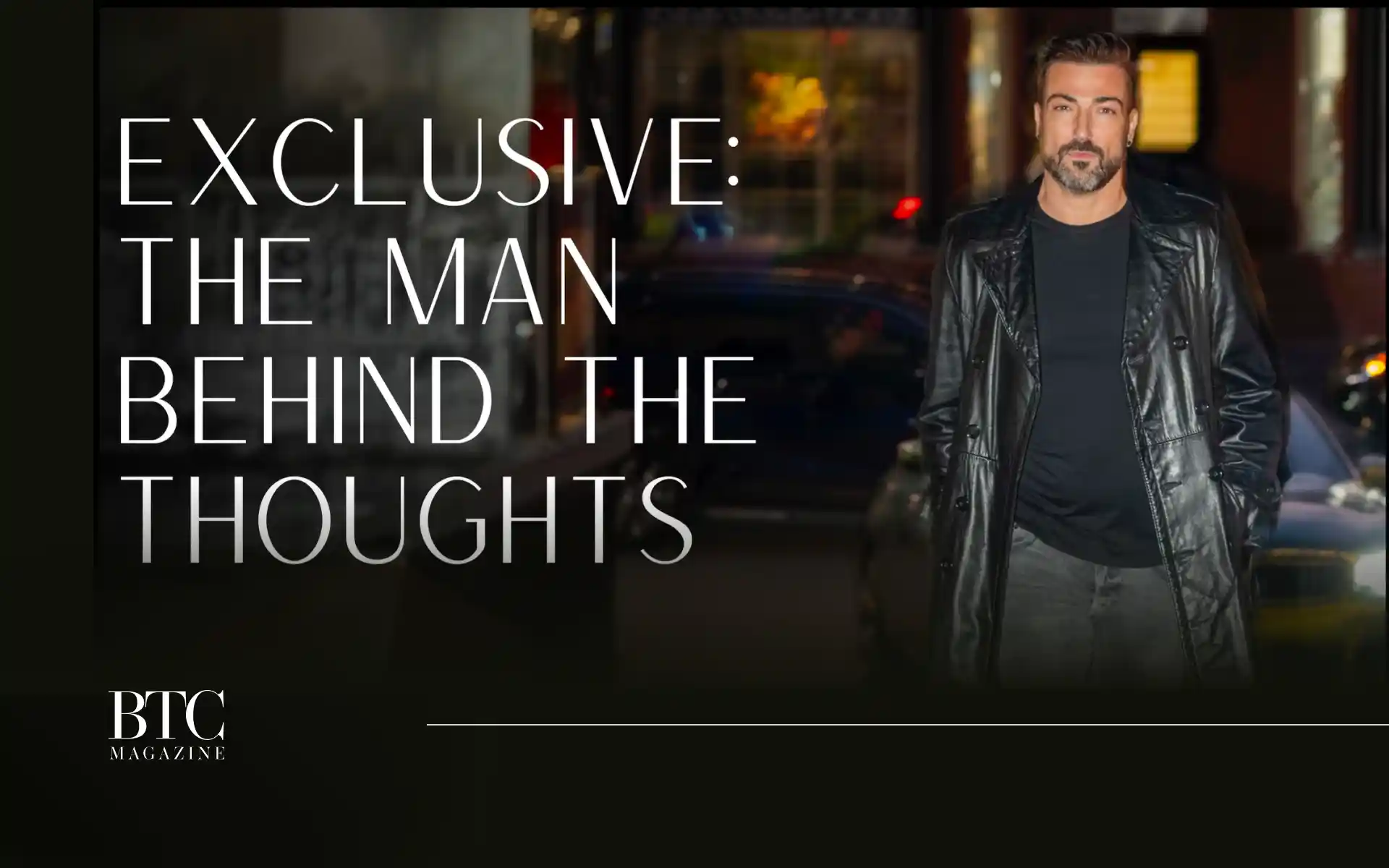
It's an unusually warm spring afternoon when I meet Joseph Tito at a sunlit café in the arts district. He arrives in a simple black t-shirt, jeans with what appears to be a small handprint of glitter on one knee, and an easy smile that immediately puts me at ease. The former film director and producer, now author of the highly anticipated "Random Thoughts: The Sh*t We Don't Talk About" (releasing May 15th), carries himself with the relaxed confidence of someone who has nothing left to prove, and perhaps, more tellingly, nothing left to hide.
As he settles in across from me, apologizing for being two minutes late ("school pickup line drama, someone brought homemade slime to share"), I'm struck by how different he seems from the sleek industry powerhouse who once commanded film sets across the Middle East and Europe. The transformation is the subject of not only our conversation today but also the core of his upcoming work.
NW: Your book "Random Thoughts" comes out in just days. For those who haven't heard about it yet, what should they expect?
Joseph Tito: laughs Definitely not a traditional self-help book. It's more like... all those thoughts you have at 2 a.m. in the shower or during that weird existential moment in the grocery store checkout line. It's everything we bottle up because we're too afraid to say it out loud.
The book dives into the messy middle of life, not just fatherhood, but identity, mental health, relationships, grief, anxiety, aging, love. It's nonlinear, sometimes punchy, sometimes poetic, but always unfiltered. I wrote it not as some expert with answers, but as someone who's lived through the chaos and still chooses to show up, even on the days when showing up feels impossible.
There's this misconception that it's just a parenting book, but it's really about the human experience, which parenthood happens to crack wide open in this particularly intense way. It's for anyone who looks like they have it all together on Instagram but is falling apart quietly at night. The stuff we only whisper to our closest friends that I finally gave myself permission to write down.
NW: That's quite different from what's typically available in the self-help section. What made you decide to write it?
JT: I think we're drowning in advice but starving for truth. There are plenty of books telling us how to optimize our lives, fix our problems, become better versions of ourselves. But I needed something that acknowledged how messy and contradictory the human experience actually is.
After the twins were born, that need became even more acute. This massive life change cracked me open in ways I wasn't prepared for, and I started writing, not to give advice or find solutions, but to make sense of my own experience. To document the emotional truth of what I was going through.
It began as these scattered late-night notes on my phone. Shower thoughts. Random reflections that felt too raw to share but too important to forget. Eventually I realized these fragments were telling a larger story about vulnerability, transformation, and what it means to show up authentically in a world that rewards performance.
So many of us are walking around with these heavy thoughts we don't feel safe expressing. We think we're the only ones who feel this way. I wanted to say the quiet parts out loud, to create a space where people could feel less alone in their internal struggles.
NW: You mention this identity shift. You had quite a different life before fatherhood, didn't you?
JT: laughs You could say that. Before the twins, I was the guy catching flights to three different countries in a week, living out of luxury hotels, working 20-hour days on set, then unwinding at industry parties until dawn. My life was high-octane, glamorous in that exhausting way the entertainment industry can be. Red carpets, film festivals, production emergencies in exotic locations.
It was thrilling and fulfilling creatively, but there was also this... emptiness to it. A sense that I was collecting experiences rather than fully living them. I was always moving too fast to feel anything completely.
"We’re drowning in advice but starving for truth."
NW: And then came fatherhood.
JT: nods And then came fatherhood, which slams the brakes on everything and forces you to feel absolutely everything at full volume. There's no emotional fast-forwarding through parenting. It demands your full presence in a way nothing in my previous life ever did.
My husband Frank and I had talked about having kids for years, but the reality of suddenly being responsible for two tiny humans, these fierce, funny little girls who are both completely dependent on you and absolutely their own people from day one, it rewrites your entire operating system.
NW: Your twins, Stella and Mia, are six now. How would you describe them?
JT: his whole face lights up They're magnificent chaos machines. Completely different from each other but somehow operating as a unit. Stella is this old soul in a tiny body, contemplative, justice-oriented, always asking questions that make me question my entire worldview. Last week she asked me why grown-ups invented money if it makes everyone so stressed out. I'm still working on an answer.
Mia is pure kinetic energy, she experiences the world physically, takes everything apart to see how it works, feels everything at maximum intensity. When she's happy, the whole house vibrates with it. When she's upset, it's like witnessing a tiny Greek tragedy.
Together, they're this perfect storm of curiosity, drama, profound insights, and bathroom humor. They've made me laugh harder than I ever have in my life, and they've broken me open in ways I'm still trying to understand.
NW: Your writing voice is very distinctive, raw but also wickedly funny. Has that always been your natural style?
JT: In life, yes. In my work, not until recently. My professional life in film was all about control, polish, and presenting a certain image. The entertainment industry rewards that kind of curated self-presentation.
But there's something that happens when life breaks you open, whether through parenthood, grief, anxiety, or any other profound experience, where maintaining that polished facade becomes impossible. And honestly, it starts to feel pointless too.
The voice in "Random Thoughts" emerged from necessity. It's how I talk to my closest friends at 1 a.m. when the masks come off. It's equal parts vulnerability, humor as survival mechanism, and this stubborn insistence on finding beauty in the broken places.
I've always processed difficult emotions through humor, not to diminish them, but to make them bearable. There's something about laughing in the dark that feels like an act of rebellion. The book captures that tension between the heavy stuff and finding unexpected lightness within it.
NW: The book covers much more than parenting, you write about mental health, grief, identity, relationships. Was it difficult to be so vulnerable about such personal topics?
JT: pauses Terrifying, actually. There's safety in keeping your struggles private. Once you put them on paper, they exist outside of you. They become real in a different way.
But I've found that the things we're most afraid to talk about are usually the things that connect us most deeply to others. The specific circumstances might differ, but the core emotions, fear, doubt, grief, longing, those are universal.
Mental health is a central theme in the book because it's been central to my journey. I write about my experiences with anxiety, therapy, the ways trauma lives in the body. Not because I have any expert knowledge, but because I know what it's like to feel broken and alone in that brokenness.
Same with grief. I lost my father right before the twins were born, which created this strange convergence of endings and beginnings. Writing about that intersection, how joy and pain can coexist, felt necessary, even when it was uncomfortable.
The most vulnerable sections were actually the hardest to write but ended up being the most impactful for early readers. There's something powerful about naming the things we're afraid to admit, even to ourselves.
NW: I understand you have another book in the works, a memoir coming in 2026?
JT: nods Yes, "From Jet Setter to Fatherhood" coming April 2026. While "Random Thoughts" is more of a collection of essays and reflections on the human condition, the memoir goes deeper into my personal journey, the transition from that fast-paced international career to this very different life centered around family.
It explores questions of identity, reinvention, what it means to let go of a version of yourself you thought you'd always be. It's about grief and joy coexisting, about finding unexpected purpose, about creating family on your own terms.
It also gets more into the specifics of queer fatherhood, surrogacy, raising children without traditional gender expectations, and navigating a world that still doesn't have many models for families like ours.
NW: Final question, what do you hope readers take away from "Random Thoughts"?
JT: Permission. Permission to hold contradictory emotions simultaneously. Permission to be a work in progress. Permission to acknowledge the dark thoughts without being defined by them.
I hope it creates a sense of connection, that someone will read a passage and think, "Oh my god, I thought I was the only one who felt this way." There's profound relief in that recognition, in knowing you're not alone in your most private struggles.
I also hope it encourages people to have more honest conversations. So many of us are walking around carrying these heavy thoughts, about our identities, our mental health, our relationships, our deepest fears, and we think we're the only ones. We're all performing for each other, and it's exhausting.
If this book can be a container for some of those difficult emotions, if it can help name them and bring them into the light, then maybe we can all breathe a little easier. Maybe we can be a little gentler with ourselves and each other.
And if readers can laugh along the way, even at the hard parts, especially at the hard parts, that's the best outcome I could hope for. Because finding humor in the struggle is sometimes the only way through it.
Joseph Tito's "Random Thoughts: The Sht We Don't Talk About" releases May 15th wherever books are sold. His memoir "From Jet Setter to Fatherhood" is forthcoming from Horizon Press in April 2026.*
Members only from here
You've reached the preview. Subscribe for the full article — plus every issue and subscriber perks.
7-day free trial, then from $3.99/mo. Cancel anytime.
Instant access · Cancel anytime
“I started reading for the fashion pieces, but the essays are what kept me coming back.”
Maya R. · Toronto reader
Random Thoughts: The Sh*t We Don't Talk About is an unfiltered essay collection by Joseph Tito covering fatherhood, mental health, identity, grief, anxiety, and the parts of adult life people think about at 2 a.m. but rarely say out loud. It's described as nonlinear, sometimes punchy and sometimes poetic, written not by an expert with answers but by someone who shows up even when it feels impossible.
Joseph Tito is a former film director and producer who worked across the Middle East and Europe before pivoting to writing, publishing, and the launch of Between the Covers Magazine. He's a father of twin girls, a co-founder of JEO Publishing, and someone whose public persona reflects his private philosophy of radical honesty over polished presentation.
Tito pushes back on that label directly. While fatherhood is threaded through the book, it spans identity, relationships, mental health, grief, and aging. Calling it a parenting book would narrow something deliberately wide. It's written for anyone navigating the messy middle of life, not specifically for parents.
The book deliberately avoids the expert-with-answers format. There's no five-step plan, no toxic positivity, and no tidy resolution. What it offers instead is radical acknowledgment that being human is sometimes beautiful, often brutal, and always complicated, along with a compassionate hand extended once it arrives in that uncomfortable territory.
Keep exploring
Read the full story
7-day free trial · From $3.99/mo
Discover every article featured in our latest BTC issues, bringing the month's stories together in one place, so you can easily read and explore everything.
Read Now →Skin has no pronouns, and neither does great skincare. Discover clean beauty made for every skin type, age, and identity. Honest formulas, clear ingredients, and inclusive beauty that actually belongs to you.
Clean beauty for skin, not labels. Face mists, serums, moisturizers, and masks made for you, whoever you are.
Colour makeup and body care that work with your skin, not against it. Inclusive beauty, made honestly.
Beauty gifts and skincare gifts, curated into sets your favourite person will actually use and love.
You deserve stories that actually get you. A BTC magazine subscription unlocks unlimited access to in-depth, unfiltered articles, exclusive podcasts, and member perks you'll genuinely love. Try it free for seven days, then keep enjoying full access from just $3.99 a month. Cancel anytime, no pressure at all. Ready to go deeper?
7-day free trial, then from $3.99/mo. Cancel anytime.
.webp)

Comments
No comments yet
No comments to show yet. Subscribe to join the conversation.
Log in or subscribe to comment on this article.