A somatic therapist on anger, oxytocin, and the radical act of letting yourself be held
Most people think women rebel when they leave. When they ask for divorce. When they finally say, enough.
But that's not the rebellion.
Leaving is the outcome. The rebellion starts much earlier, with the refusal to fall into a role and be erased by it.
Anger was my first signal. Not the explosive, obvious kind. The slow, clarifying kind that builds in the body over years of ignored requests, overridden needs, and pleas for support that got minimized until they stopped coming. Anger had volume. It had direction. It moved me out of a script I'd been following so long I'd mistaken it for my own writing.
But anger also masks what's underneath. Once it dissolved, what remained was quieter and harder to name, years of resentment, overwhelm, the accumulated weight of too much responsibility with no space in between to just be me.
The moment of real recognition arrived without warning, the way those moments do.
I was looking at a photograph from my mother's seventieth birthday. There was a beautiful cake. My brother leaning in to kiss her cheek. It should have been pure joy.
But her face. Her body. Her energy.
Something stopped me.
It wasn't humility or modesty or the shy pleasure of someone unaccustomed to fuss. What I was seeing was discomfort, a kind of awkwardness, as though the attention didn't quite belong to her. As though she didn't fully deserve that much love directed her way. As though being celebrated was a burden she was politely enduring rather than a moment she was allowed to inhabit.
My own body contracted, almost imperceptibly.
How many times had I done the same thing? Deflected a compliment. Made myself smaller to feel more welcome. Performed gratitude while quietly disappearing inside it.
That's when it landed, not as a thought, but as a recognition in my chest. This wasn't just behavior. It wasn't just a pattern of thought. It was a survival state. Chronic over-functioning. People-pleasing. Dimming yourself because girls are nice and quiet and don't make noise. Hiding behind perfectionism because nobody wants to be the woman others call selfish. And so we absorb. We accommodate. We hold.
We call it strength. Sometimes it's grief.
When you spend years as the one who gives, who stabilizes, who anticipates, who manages, your nervous system adapts around it. It becomes organized around offering. Around holding. And slowly, without announcing itself, receiving becomes foreign. Uncomfortable. Something that requires justification.
"Pleasure, for a woman, is not a luxury. It is regulation."
Oxytocin, the hormone that lowers stress, softens vigilance, and creates felt safety in the body, is how women regulate. And we derive it through connection, warmth, affection, and yes, pleasure. In early motherhood, that oxytocin floods in through our babies. It cracks us open, makes us ferocious and tender at once. But under the relentless weight of modern motherhood, we become isolated. The nervous system that was once held by community, by ritual, by rest, is now running on permanent alert dressed up as devotion. We pride ourselves on how much we can carry while the net beneath us quietly frays.
I was the stabilizing force in my family. But I am also a woman who needs to be stabilized. To be held. To be seen beyond my function. To exhale somewhere without having to manage what happens next.
That was where the deeper rebellion had to begin. Not loudly. Not dramatically.
Just: I am allowed to receive.
Self-care stopped being another item on a long list, the thing I squeezed in after everything else was handled, the concession I made to myself so I could keep going. It became foundational instead. Non-negotiable in the way sleep is non-negotiable. Not earned. Just necessary.
What that looked like wasn't grand. Cooking a good meal and eating it slowly, without standing at the counter. Music in the kitchen while my daughter and I moved through the morning. Sitting in the sun long enough for my shoulders to actually drop. Laughing with friends without one eye on the door.
Small things. Ordinary things. But in those moments I wasn't bracing. I wasn't earning. I wasn't performing usefulness to justify my presence.
The freedom I had been looking for wasn't dramatic. It was the ability to enjoy something without having to explain it first. To let joy move through me without immediately asking whether I'd done enough to deserve it.
Rebellion, I've come to understand, is not destruction.
It's this. Staying in the room when someone is celebrating you. Letting the attention land. Not contracting against the love directed your way. My mother couldn't do that at seventy. I want to learn it now.
"Leaving wasn't the rebellion. Refusing to disappear was."
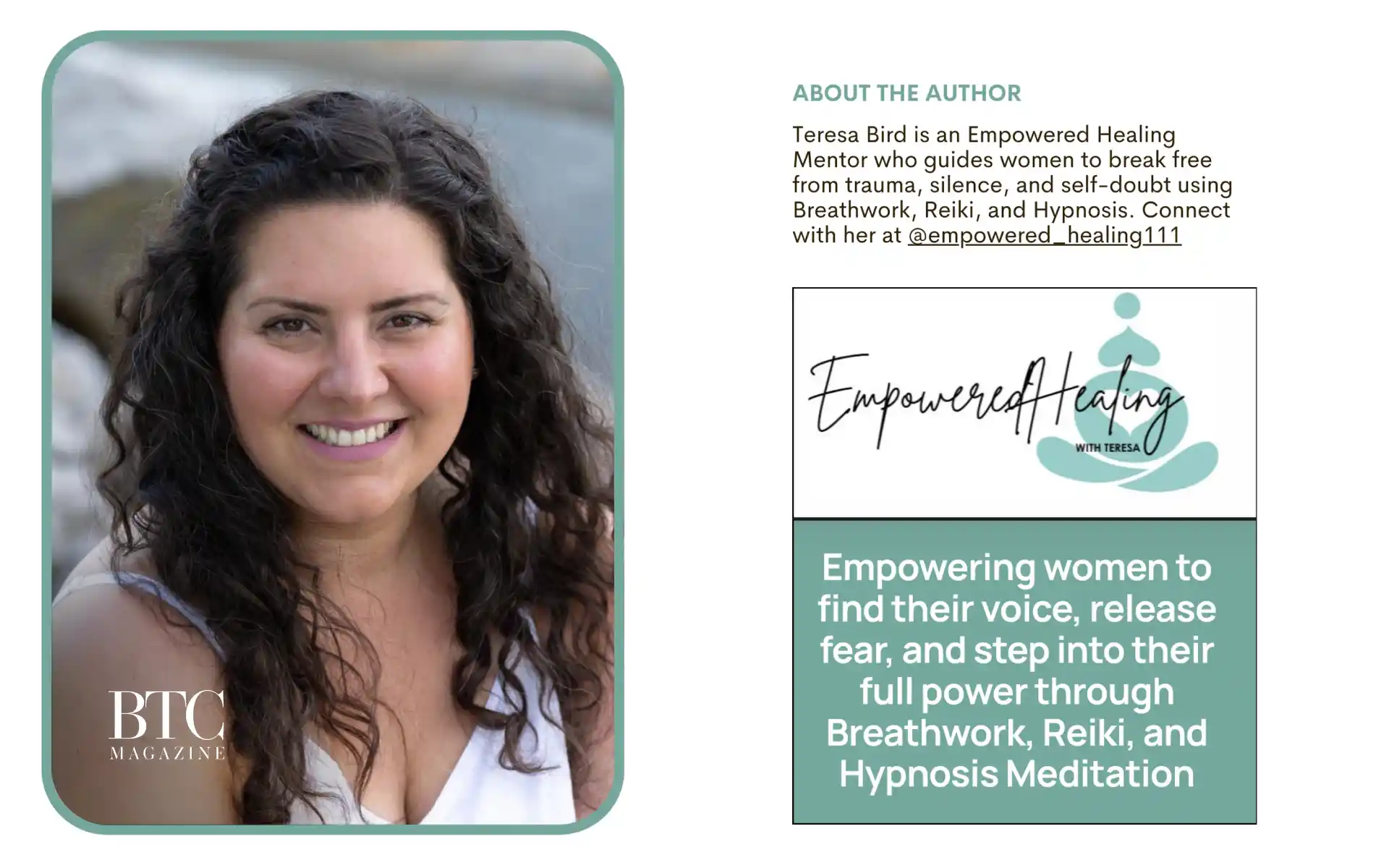
Henrieta Haniskova is a former nurse and clinical aromatherapist working at the intersection of neurosomatic experience, women's health, and sensory ritual. She helps women restore nervous-system balance and emotional vitality through touch, scent, and presence.
SIDEBAR: SEVEN WAYS TO HOLD YOURSELF WHILE YOU HEAL
1. Pause Before You Interpret
When a big emotion rises, shame, anger, grief, resist the urge to analyze it. Ask: What is happening in my body right now? Heat? Tightness? Numbness? Name sensation before story.
2. Reduce the Intensity, Not the Truth
You do not have to feel everything at once. Open the door a little. Then close it. Take one breath. Look around the room. Let your nervous system know you are here, now, safe enough.
3. Find One Anchor
A hand on your chest. Feet pressed into the floor. Warm tea in your palms. Your body needs something steady while you touch something tender.
4. Separate Past From Present
Ask gently: Is this reaction about this moment or is it older? Sometimes what feels overwhelming now is a younger part of you finally speaking. You are not regressing. You are remembering.
5. Befriend the Protector
Notice the part of you that wants to shut this down. The one that says, "Don't go there." That part kept you safe once. Thank it before you ask it to soften.
6. Move in Small Doses
Deep work is not dramatic. It is rhythmic. Touch the emotion. Return to something neutral. Touch it again. Healing happens in waves, not floods.
7. End With Return
After you feel, orient back to the present. Stand up. Wash your hands. Step outside. Text a friend. Do something that signals completion. The nervous system needs clear endings as much as it needs expression.
8. Hello


Comments
No comments yet
No comments to show yet. Subscribe to join the conversation.
Log in or subscribe to comment on this article.