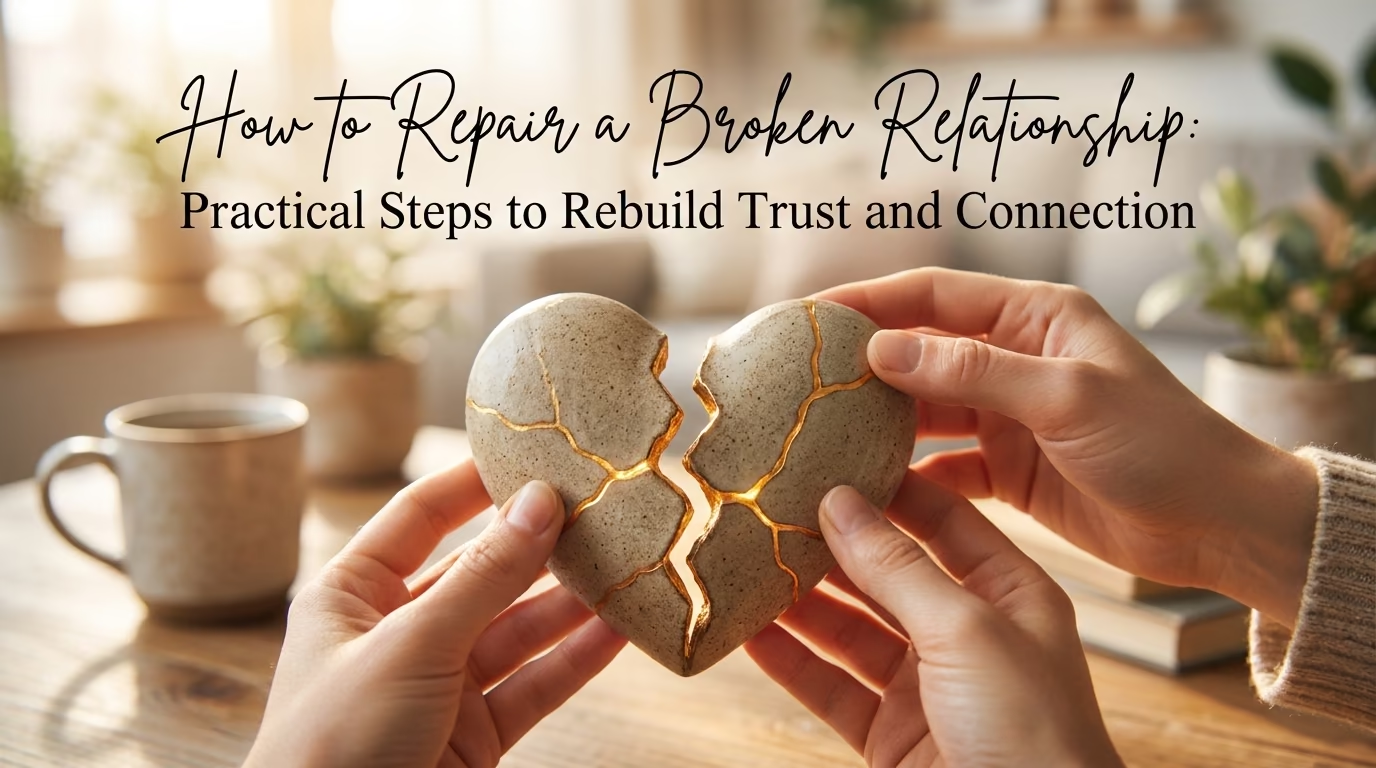
If you're searching for how to repair a broken relationship, chances are things haven't felt right for a while. Maybe there's been a betrayal, a slow drift into distance, or one too many arguments that never really got resolved. Whatever brought you here, the fact that you're looking for a way forward already says something important: you still care enough to try.
Repairing a relationship isn't about pretending the damage never happened. It's about understanding what actually broke, being honest about what it will take to fix it, and doing the consistent, sometimes uncomfortable work of rebuilding trust and connection over time. This guide walks through what genuinely helps, what tends to backfire, and how to know whether the relationship is one worth repairing in the first place.
Why Relationships Break Down in the First Place
Before jumping into repair strategies, it helps to understand what typically causes the breakdown. Most broken relationships don't fall apart because of one dramatic event, even when a single incident feels like the breaking point. More often, the damage builds gradually through smaller, repeated patterns.
Common contributors include unresolved conflict that gets buried instead of addressed, a slow erosion of emotional intimacy from busyness or distraction, breakdowns in honest communication, unmet expectations that were never clearly discussed, and breaches of trust ranging from small dishonesty to significant betrayal.
Understanding the actual root cause matters because it changes what repair looks like. Rebuilding trust after infidelity requires a different process than reconnecting after years of emotional distance caused by work stress or poor communication habits. Naming the real issue honestly is the first step toward addressing it.
Signs a Relationship Can Still Be Repaired
Not every relationship that feels broken is beyond fixing, but not every relationship should be repaired either. A few signs suggest there's still something worth working with:
Both people are willing to acknowledge their part in the breakdown, not just place blame on the other person
There's still an underlying sense of care or connection, even if it's currently overshadowed by hurt or frustration
Both partners are open to changing specific behaviors, not just talking about change in the abstract
Difficult conversations, while painful, don't consistently turn into contempt, stonewalling, or emotional or physical harm
If both people are engaged in the process, even imperfectly, there's usually room to rebuild. If only one person is trying while the other remains dismissive or unwilling to acknowledge any responsibility, repair becomes significantly harder, and sometimes isn't realistic.
Step by Step: How to Start Repairing a Broken Relationship
Step 1: Have an Honest Conversation About What Happened
Repair can't begin until both people are willing to talk honestly about what actually went wrong. This isn't the moment for vague statements like "things just aren't the same." It requires specifics: what happened, how it affected each person, and what each partner wishes had gone differently.
This conversation works best when both people commit to listening without immediately defending themselves. That doesn't mean accepting blame that isn't yours, it means genuinely trying to understand the other person's experience before responding to it.
Step 2: Take Ownership of Your Part
Even in situations where one person's actions caused more direct harm (such as infidelity or a significant broken promise), most relationship breakdowns involve some contribution from both sides, whether that's poor communication, unaddressed resentment, or simply drifting apart over time.
Taking ownership doesn't mean equally splitting blame in every situation. It means being honest about your own patterns, without minimizing what happened or turning the conversation into a debate about who was worse.
Step 3: Rebuild Communication Habits
Poor communication is one of the most common threads running through broken relationships. Rebuilding it often starts with small, consistent habits rather than one big breakthrough conversation:
Setting aside regular, distraction-free time to check in with each other
Practicing active listening, which means genuinely absorbing what the other person says before formulating a response
Naming feelings directly instead of expecting your partner to guess what's wrong
Avoiding blanket statements like "you always" or "you never," which tend to escalate conflict rather than resolve it
Step 4: Rebuild Trust Gradually, Not Instantly
Trust doesn't return the moment someone says sorry, even when the apology is genuine. It's rebuilt through consistent behavior over time, demonstrated repeatedly, not just promised once.
If trust was broken through dishonesty, this often means being more transparent than usual for a period, not because trust has to be earned back through surveillance, but because consistent transparency helps rebuild a sense of safety. If trust eroded through emotional neglect, it might mean consistently showing up, following through on plans, and being present in ways that were previously missing.
Step 5: Address Resentment Directly
Unspoken resentment is one of the quieter relationship killers. It builds slowly, often over small things that were never addressed, until it eventually shows up as distance, sarcasm, or sudden blowups over seemingly minor issues.
Addressing resentment means being willing to bring up old hurts that were never properly resolved, even if it feels uncomfortable to revisit them. Left unaddressed, resentment tends to resurface repeatedly, often at the worst possible moments.
Step 6: Reintroduce Small Moments of Connection
Repair isn't only about resolving conflict, it also requires actively rebuilding the positive side of the relationship. Small, consistent gestures often matter more than grand ones: a genuine check-in, remembering something the other person mentioned, spending unstructured time together without an agenda.
Relationships that survive difficult periods tend to be the ones where both people intentionally reintroduce warmth and appreciation, rather than only focusing on what went wrong.
Common Mistakes People Make When Trying to Repair a Relationship
Expecting an apology to fix everything immediately. A sincere apology is a starting point, not a conclusion. Real repair takes consistent behavior over weeks and months.
Bringing up past mistakes as ammunition during unrelated arguments. If something has genuinely been forgiven and addressed, repeatedly bringing it up during unrelated disagreements undermines the repair process.
Trying to repair the relationship without addressing the actual root cause. Focusing only on surface-level symptoms, like reducing arguments, without addressing the underlying issue that caused them tends to lead to the same problems resurfacing later.
One person doing all the work. Repair requires mutual effort. If only one partner is consistently trying to fix things while the other remains passive or resistant, the relationship rarely improves in a sustainable way.
Rushing back to "normal" too quickly. Skipping the harder conversations in favor of pretending everything is fine again often means the underlying issue never actually gets resolved.
Myths Versus Facts About Relationship Repair
Myth: If you truly love each other, the relationship should be easy to fix. Fact: Love and difficulty aren't mutually exclusive. Many relationships worth saving require real, sustained effort, especially after a significant breakdown of trust or communication.
Myth: Bringing up old issues means you haven't forgiven your partner. Fact: Occasionally revisiting unresolved patterns, especially if they're recurring, is different from using the past as a weapon. The distinction lies in intent: understanding versus blame.
Myth: Couples therapy is only for relationships that are already failing. Fact: Many couples use therapy proactively, as a structured space to improve communication and address smaller issues before they escalate into larger ones.
Myth: Time alone heals a broken relationship. Fact: Time can create distance from the initial pain, but without active repair work, unresolved issues typically remain unresolved, simply dormant until they resurface.
When Professional Support Can Help
Some relationship breakdowns benefit significantly from professional guidance, particularly when trust has been deeply broken, when communication repeatedly breaks down into conflict neither person can de-escalate, or when past trauma is influencing current relationship patterns.
A licensed couples therapist can offer structured tools for communication, help both partners feel heard in a neutral space, and identify patterns that are difficult to see clearly from the inside. Seeking professional support isn't a sign that a relationship is beyond repair, it's often one of the more effective ways to give a struggling relationship a genuine chance at recovery.
Who Should Try to Repair the Relationship, and Who Shouldn't
Working to repair a relationship makes sense when both people are willing to be honest, take responsibility for their part, and commit to consistent change over time, even if that process is uncomfortable.
Repair becomes significantly harder, and in some cases inadvisable, in relationships involving ongoing emotional, physical, or verbal abuse, a consistent unwillingness from one partner to acknowledge any responsibility, or a pattern of repeated broken promises with no meaningful behavioral change over time. In these situations, prioritizing personal safety and wellbeing matters more than preserving the relationship itself.
Real-Life Application: What Repair Actually Looks Like Over Time
Repairing a relationship rarely follows a straight line. A couple working through a breach of trust might have a productive, honest conversation one week, followed by a difficult setback the next when an old insecurity resurfaces. This isn't a sign that repair has failed, it's a normal part of the process.
What matters more than avoiding setbacks entirely is how both people respond when they happen: returning to honest conversation, reaffirming commitment to the process, and continuing to build consistency over weeks and months rather than expecting a single conversation to resolve everything permanently.
Professional Tips for Making Repair Stick
Set realistic timelines. Meaningful repair, especially after a significant breach of trust, often takes months rather than weeks.
Check in on progress periodically. A brief, regular conversation about how both people are feeling about the relationship's progress helps catch small issues before they grow.
Celebrate genuine progress. Acknowledging positive changes, rather than only focusing on what still needs work, helps reinforce the effort both people are putting in.
Stay curious about your partner's experience. Relationships often break down when people stop asking genuine questions about how the other person is really doing.
Final Thoughts
Learning how to repair a broken relationship starts with honesty, both about what actually went wrong and about what it will genuinely take to move forward. There's no shortcut that replaces consistent effort over time, but relationships that survive difficult periods usually share a few things in common: both people take ownership of their part, communication improves gradually rather than instantly, and trust gets rebuilt through repeated, demonstrated behavior rather than words alone. If both people are willing to do that work, most relationships have a real chance at genuine repair.
If you're navigating a relationship that involves abuse or feel unsafe at any point, please reach out to a trusted professional or a local support service. Your safety always comes first.



Comments
No comments yet
No comments to show yet. Subscribe to join the conversation.
Log in or subscribe to comment on this article.