
Available on iOS & Android
Read BTC Anywhere
Carry the full magazine experience in your pocket — stories, podcasts, exclusive perks, and more. Download the free app today.
Carry the full magazine experience in your pocket — stories, podcasts, exclusive perks, and more. Download the free app today.
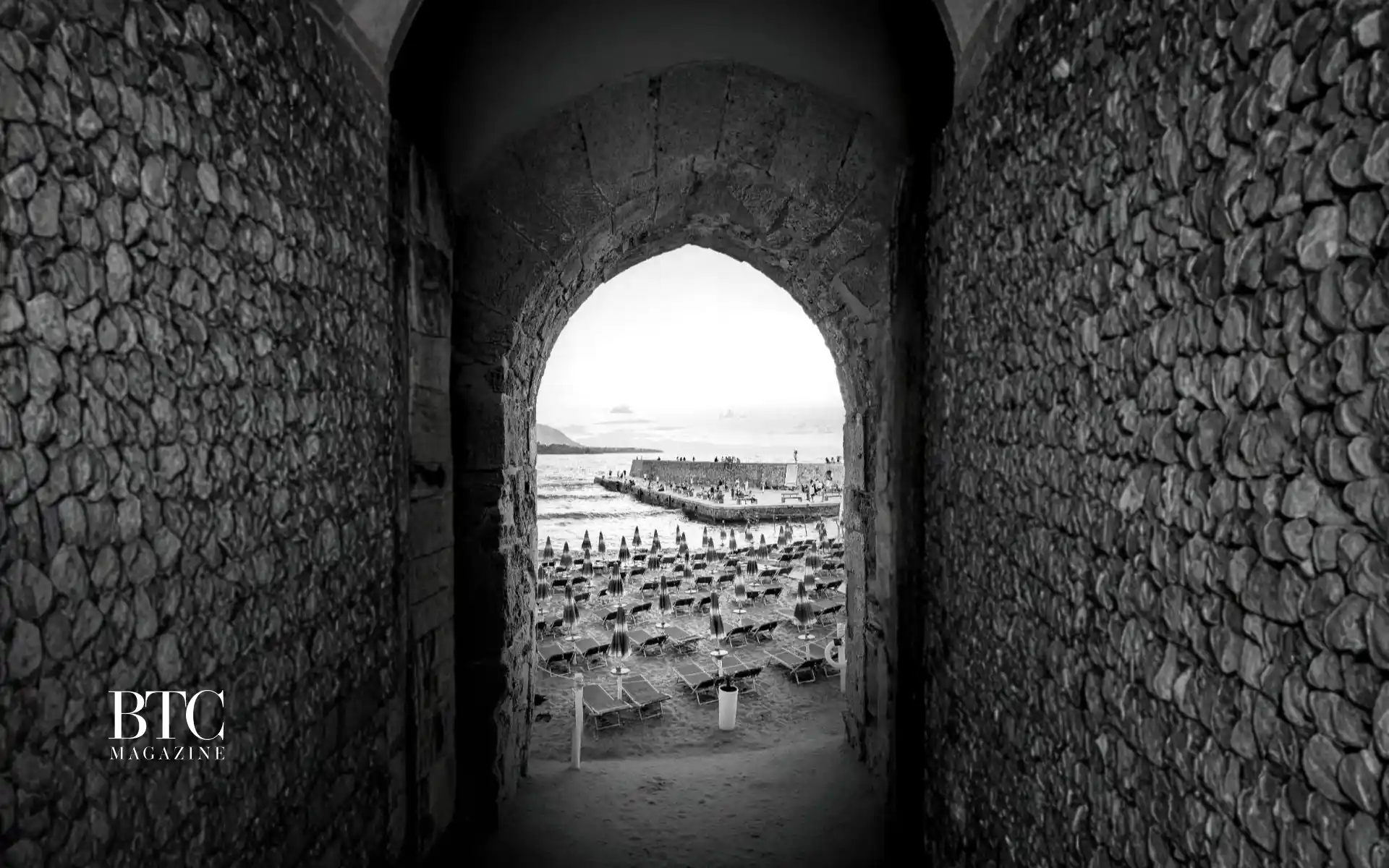
Every Year, I become a pilgrim to Sicily.
I fold myself into a suitcase,
Toronto’s steel and glass still clinging to my skin,
and land where the air tastes of lemon and salt.
The sun is different here.
It’s not just warmth, it baptizes.
It presses its fire into my bones
until I am molten,
until the goddess I keep locked away all winter
walks out in bare feet across the hot sand.
In Sicily, every table hums with history:
tiles cracked by centuries,
walls whispering in dialects older than maps,
laughter that lingers like incense.
Here, they hand you limoncello not as a sale,
but as an offering.
A backyard lemon tree distilled into liquid sun,
and they wait, eyes bright,
to see if your tongue recognizes
the sweetness of their land.
I walk away each summer
changed, sharper, softer.
The overstated textures,
red volcanic dust,
blue Mediterranean mirrors,
ochre walls collapsing into beauty,
sear themselves into my memory.
My irises expanding to absorb every detail.
I carry them back with me,
tuck them into the corners of my work.
So when winter drapes its heavy shawl,
when the sky hangs low and colorless,
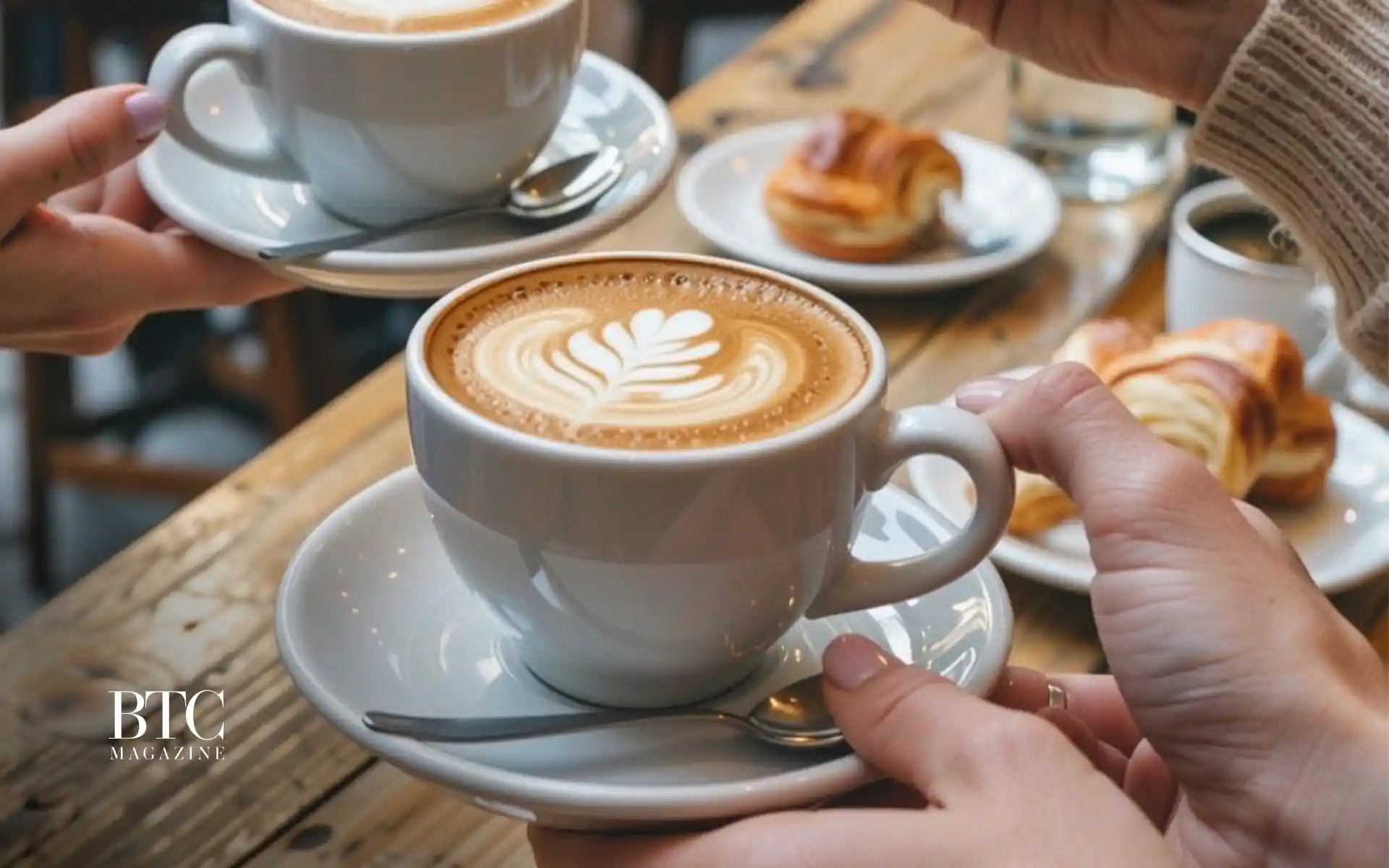
I pour fire from my moka pot,
sip bitterness that tastes of Sicilian mornings.
I remember the woman I become there,
my alter ego rising like heat off stone.
And so, even in the deepest cold,
I stitch August into February,
bringing the South into the North,
so that my work, my words, my days
are brightened by the goddess
who wakes every summer
on that island of sun, sand, and sea.
Members only from here
You've reached the preview. Subscribe for the full article — plus every issue and subscriber perks.
7-day free trial, then from $3.99/mo. Cancel anytime.
Instant access · Cancel anytime
“I started reading for the fashion pieces, but the essays are what kept me coming back.”
Maya R. · Toronto reader
The poem describes Sicily as a place where the sun baptizes rather than simply warms, where every table hums with centuries of history, and where limoncello is offered as an offering rather than a sale. It represents a version of the traveler that doesn't exist back home, described as a goddess who walks in bare feet on hot sand.
The sensory memories of Sicily, red volcanic dust, blue Mediterranean mirrors, and ochre walls, are brought back to Toronto and stitched into winter work. The firelit moka pot ritual each morning in the cold months carries the warmth of Sicilian mornings. The poem frames travel as something you bring home rather than something that ends at the airport.
Pilgrimage implies a journey with purpose beyond tourism. The annual return is described as a transformation rather than a vacation, a shedding of the Toronto steel-and-glass self and the emergence of someone sharper, softer, and more fully alive. The word pilgrim also honors the seriousness of the practice rather than treating it as leisure.
Keep exploring
Read the full story
7-day free trial · From $3.99/mo
Discover every article featured in our latest BTC issues, bringing the month's stories together in one place, so you can easily read and explore everything.
Read Now →Skin has no pronouns, and neither does great skincare. Discover clean beauty made for every skin type, age, and identity. Honest formulas, clear ingredients, and inclusive beauty that actually belongs to you.
Clean beauty for skin, not labels. Face mists, serums, moisturizers, and masks made for you, whoever you are.
Colour makeup and body care that work with your skin, not against it. Inclusive beauty, made honestly.
Beauty gifts and skincare gifts, curated into sets your favourite person will actually use and love.
You deserve stories that actually get you. A BTC magazine subscription unlocks unlimited access to in-depth, unfiltered articles, exclusive podcasts, and member perks you'll genuinely love. Try it free for seven days, then keep enjoying full access from just $3.99 a month. Cancel anytime, no pressure at all. Ready to go deeper?
7-day free trial, then from $3.99/mo. Cancel anytime.
.webp)
.webp)
Comments
No comments yet
No comments to show yet. Subscribe to join the conversation.
Log in or subscribe to comment on this article.