
Available on iOS & Android
Read BTC Anywhere
Carry the full magazine experience in your pocket — stories, podcasts, exclusive perks, and more. Download the free app today.
Carry the full magazine experience in your pocket — stories, podcasts, exclusive perks, and more. Download the free app today.
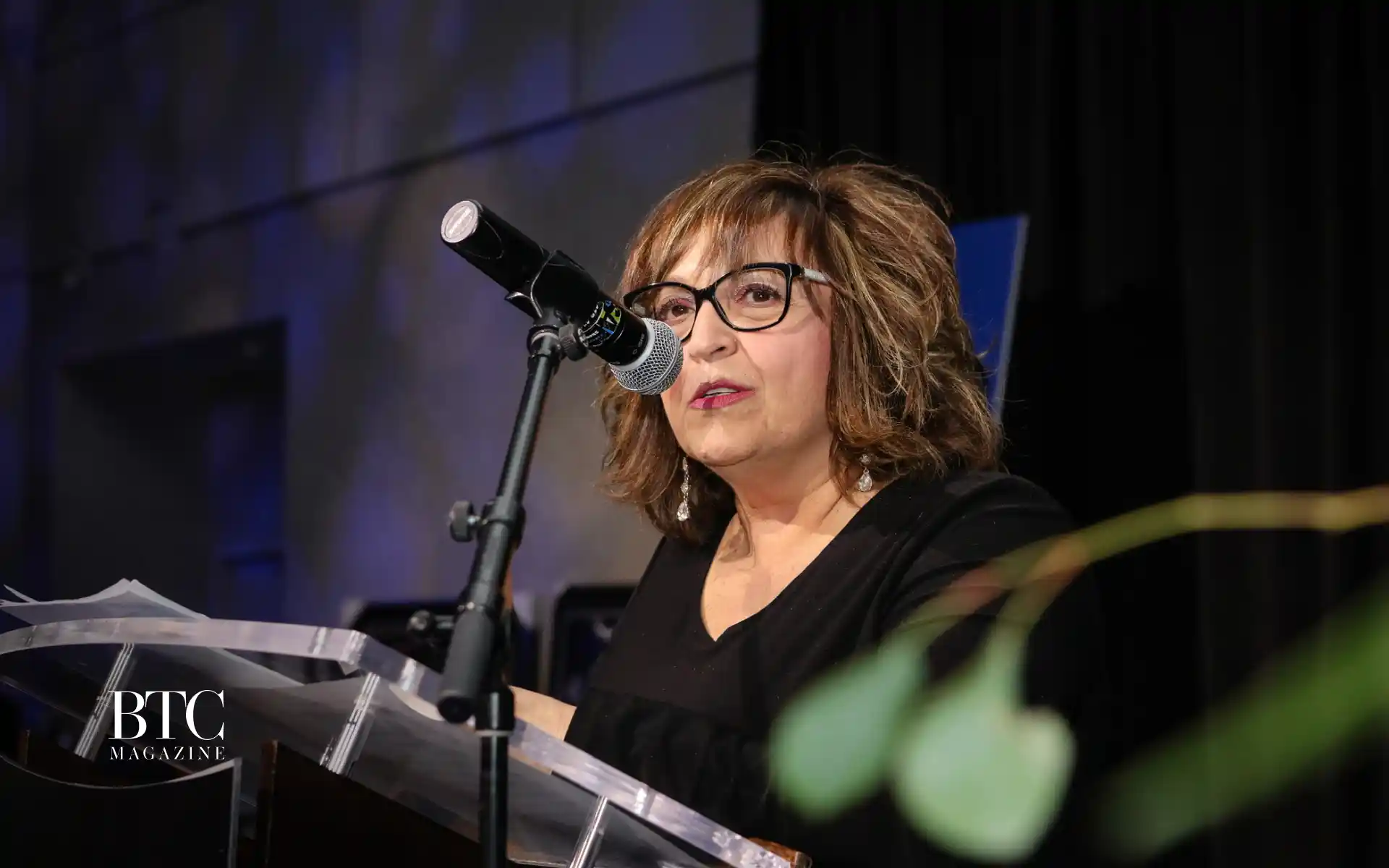
There's a street named after Elvira Caria in Vaughan. She didn't pay for it, she'll tell you right away. Awards line her walls, forty years' worth of recognition for lifting up her community, for being the voice that shows up at every damn event with her phone and her genuine give-a-shit attitude.
But when I meet her at The Roost Café on a grey autumn morning, she says the work that matters most is the stuff nobody sees.
"My real satisfactory work?" She pauses, weighing whether to trust me with this. "I help young girls escape human trafficking. You can't put that on social media."
This is Elvira Caria: the woman who refused to be radio's giggling fool, who chose late-night shifts over morning show glory so she could be home when her son's school bus arrived, who now sits across from me one year after burying that same son at 25.
"I wouldn't be here if it wasn't for the community," she says. And she means it literally.
Picture this: a young Elvira in a radio control room, told by a well-known male broadcaster that her job was to giggle. To be the pretty voice that makes him sound better.
"I don't do giggling fool," she says now, decades later, the Southern Italian fire still in her voice.
She stopped showing up to giggle on cue. Got fired on a Friday. Instead of folding, she handed her termination papers back: "If you can find a better reason to fire me on Monday, I'll accept it. If not, I'm coming back."
Monday passed. So did Tuesday. By Friday she expected another dismissal, everyone fires on Fridays. But a month later the man who told her to giggle was gone. Elvira stayed for six more years.
"I found my value voice," she says. "I wasn't going to bend for someone else's value."
At the height of her career, being groomed for a morning show at one of Canada's top stations, Elvira walked away.
"Nobody quits Rock Radio," her boss said.
"Well, I just did."
She took the shifts nobody wanted, weekends, evenings, 3 a.m. hits at Yonge and Dundas. People called it sacrifice. She calls it choice.
"While others were sleeping, I was talking to the people we now call homeless. Nobody wakes up saying, I want to be on the streets when I grow up. Nobody."
The choice meant she was home when Matthew got off the school bus. It meant knowing his friends, his teachers, his world. For 25 years, it meant being Matthew's mom first, Elvira Caria second.
Here's the part that will gut you: she spent decades insisting she was more than just Matthew's mom. She was a broadcaster, a journalist, a voice for the voiceless. She built a career on authenticity when authenticity could get you fired.
And then, in 2024, Matthew was gone, twenty-five years old and on the edge of everything. Suddenly all Elvira wanted was the one title that had been stripped away.
"Matthew never saw me as a radio announcer," she says, voice steady, eyes somewhere else. "He saw me as his mom. And that's all he cared about."
Let's talk about not getting out of bed. About hygiene being optional when grief is bone-deep.
Her sister-in-law was the one who finally broke through: "They need you. My boys need you! You're more than their Zia."
So Elvira took small steps. A shower became a victory. Coloring her hair, an achievement. Looking in the mirror and trying to recognize whoever stared back.
"I'm mad at God," she admits. "People say everything happens for a reason. What's the fucking reason? Why take away a kid who never did anything wrong, who was just starting his life?"
Ten people can tell Elvira she's wonderful. One critic cuts deeper at 3 a.m. That's human.
She'll admit some awards now feel hollow, accolades in a season of loss. The recognition doesn't heal the absence.
But the community? They showed up in ways that mattered. The woman from her coffee shop who just sat with her, no words needed. The neighbor who mowed her lawn without asking, week after week, because grief means grass keeps growing when you can't. The radio colleague who took her shifts without question when she couldn't form words, let alone broadcast them. The mothers from Matthew's old baseball team who still text her his jersey number on game days. Or the Baseball league who named an umpire award after him.
"Someone left groceries at my door every Tuesday for three months," she tells me. "Never found out who. Just bags of real food, not casseroles, not sympathy lasagna, but the exact brands I buy. Someone paid attention to what was in my cart before. That's community."
The vigils, the legacy fund in Matthew's name, the quiet notes slipped under her door, that's what kept her standing.
"The real work happens in shadows," she says. "Helping a girl escape trafficking. Watching her graduate two years later. That's when I think, okay, maybe I've done enough to meet my maker."
After decades of answering every critic, she's learned the most radical act: indifference.
"You don't have to react to everything," she says. "Not everything requires an explanation."
She still hates small talk, still loves a stage. The influencer economy baffles her. "People think having a phone makes them reporters. Broadcasting is an accreditation, you're trained how to interview, how to fact-check, how to smell bullshit."
A year later, she's still figuring it out. Still showing up at community events with her phone and her give-a-shit intact. Still ironing her underwear (yes, really) because some control is better than none.
The street sign with her name stands in Vaughan, but she lives in the in-between, between public recognition and private purpose, between the veteran broadcaster and the grieving mother.
"The evil grows faster than good," she says. "We're always catching up."
So she keeps going. Not because grief eases, it doesn't. Not because she's found a new purpose, she hasn't. But because stopping isn't her style.
She refused to giggle back then. She refuses to perform now. And maybe that's the lesson: sometimes the most powerful thing you can do is keep showing up, even when you don't know why you're still here. Especially then.
Elvira Caria continues to support multiple charities across the GTA while maintaining her broadcasting career. She's still mad at God, still helping girls escape trafficking, still learning who she is now. She does not need your sympathy. She might need you to know that grief has no timeline, authenticity isn't content, and sometimes the bravest thing you can do is refuse to play along.
Members only from here
You've reached the preview. Subscribe for the full article — plus every issue and subscriber perks.
7-day free trial, then from $3.99/mo. Cancel anytime.
Instant access · Cancel anytime
“I started reading for the fashion pieces, but the essays are what kept me coming back.”
Maya R. · Toronto reader
Elvira Caria is a Vaughan-based broadcaster with forty years of community media work, a street named after her in Vaughan, and walls covered in recognition for lifting people up at every event with her genuine care. She is also quietly known for helping young girls escape human trafficking, work she describes as her most satisfying that cannot be put on social media.
When a well-known male broadcaster told her that her job was to giggle and make him sound better, she stopped showing up to do it. She was fired on a Friday, returned her termination papers, and told them to find a better reason by Monday. A month later, the man who told her to giggle was gone. Elvira stayed for four decades.
Matthew died at 25, one year before this interview. The article names him as the title that mattered most to her: Matthew's mom. She describes her ongoing work as possible only because of the community that has held her through that loss. The street, the awards, and the four decades of broadcasting all exist in different relief now.
Keep exploring
Read the full story
7-day free trial · From $3.99/mo
Discover every article featured in our latest BTC issues, bringing the month's stories together in one place, so you can easily read and explore everything.
Read Now →Skin has no pronouns, and neither does great skincare. Discover clean beauty made for every skin type, age, and identity. Honest formulas, clear ingredients, and inclusive beauty that actually belongs to you.
Clean beauty for skin, not labels. Face mists, serums, moisturizers, and masks made for you, whoever you are.
Colour makeup and body care that work with your skin, not against it. Inclusive beauty, made honestly.
Beauty gifts and skincare gifts, curated into sets your favourite person will actually use and love.
You deserve stories that actually get you. A BTC magazine subscription unlocks unlimited access to in-depth, unfiltered articles, exclusive podcasts, and member perks you'll genuinely love. Try it free for seven days, then keep enjoying full access from just $3.99 a month. Cancel anytime, no pressure at all. Ready to go deeper?
7-day free trial, then from $3.99/mo. Cancel anytime.
.webp)
.webp)
.webp)
Comments
No comments yet
No comments to show yet. Subscribe to join the conversation.
Log in or subscribe to comment on this article.