
Available on iOS & Android
Read BTC Anywhere
Carry the full magazine experience in your pocket — stories, podcasts, exclusive perks, and more. Download the free app today.
Carry the full magazine experience in your pocket — stories, podcasts, exclusive perks, and more. Download the free app today.
Shameelah Ismail didn’t set out to become a feminist icon. She set out to solve a problem most people ignored because it was considered normal.
Women in Pakistan’s beauty industry worked long hours, earned little, and had no flexibility. Many were highly skilled, but their earning potential was capped by geography, class, and access. If they needed flexibility, because of childcare, safety concerns, or family obligations, they lost income.
That wasn’t framed as injustice.
It was framed as reality.
Shameelah didn’t accept that.
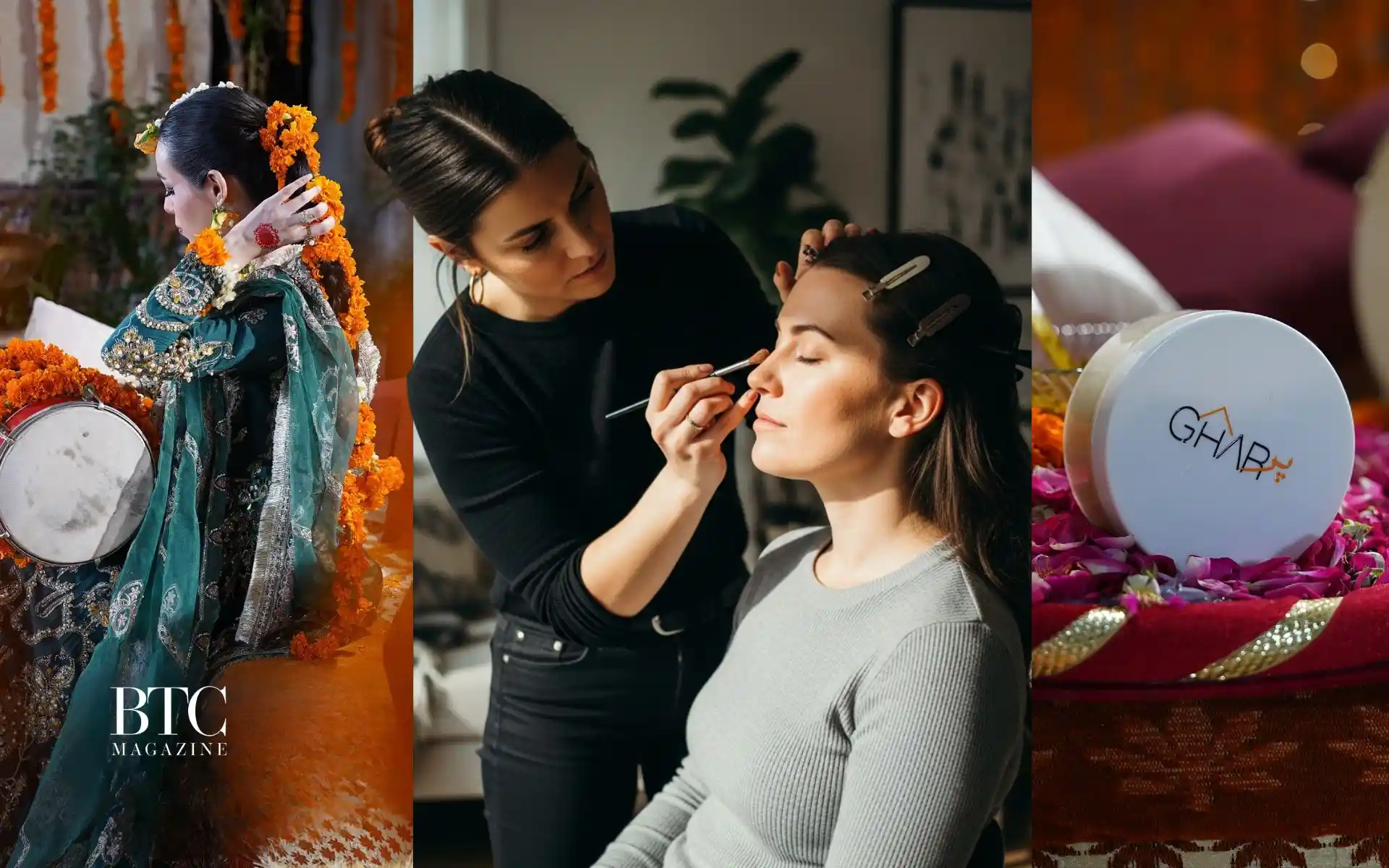
She founded GharPar in fall 2016, a tech-enabled, in-home beauty services platform designed to shift power back to the women doing the work.
“Everybody discouraged us,” she recalls. Family, friends, potential investors, all said it wouldn’t work. The skepticism only motivated her more.
GharPar connects trained beauty professionals directly with clients through a mobile app and web platform, allowing them to earn on their own terms. No salon politics. No middlemen siphoning value. No rigid schedules that punish women for having lives.
The model is simple: women become micro-entrepreneurs, choose their hours, and keep 70% of every appointment. The platform handles bookings, payments, and client management. The workers control everything else.
Today, more than 2,000 beauty professionals work through GharPar, serving around one million registered clients across Lahore, Rawalpindi, Islamabad, Faisalabad, Gujranwala, and Sialkot. Women who once earned Pakistan’s minimum wage, around $50 a month, now earn more than six times that.
By digitizing bookings and payments, GharPar brought professional independence to women who had been locked out of opportunity, not because of lack of talent, but because of lack of infrastructure.
This wasn’t charity.
It was economics.
Women who once relied on unpredictable daily wages gained income stability. Women who couldn’t commute safely could now work across the city on their own terms. Women whose labor had always been undervalued were suddenly setting their own worth.
But changing who gets to earn always creates friction.
When Shameelah pitched “female empowerment,” she faced resistance from men in the workers’ lives. Families worried about women’s independence. So she reframed the language: “We’re bringing an entire family out of poverty.” Same model. Different framing. The work continued.
When investors showed interest in 2018, they set conditions. Prove the model works outside Lahore. Show us it can scale.
She did.
Shameelah doesn’t brand herself as radical. She doesn’t perform empowerment for applause. Her leadership is quiet, pragmatic, and deeply intentional. She talks about systems. About sustainability. About scale.
In a world obsessed with visibility, her impact is measured in outcomes: women earning more, working safer, and reclaiming agency over their time.
One worker’s story captures the magnitude of what Shameelah built. A woman trapped in an abusive marriage reached out to say that working through GharPar had transformed her entire family’s trajectory. The income gave her options. The flexibility gave her breathing room. The dignity gave her power.
“That’s the moment we decided we cannot stop doing what we’re doing,” Shameelah says. “We wanted to give these women skills so that no matter where they are, they always have something to fall back on.”
In a country where women’s economic participation remains among the lowest in the world, that kind of structural change ripples outward. One woman gains independence. Her daughter sees possibility. Her community’s expectations shift.
She didn’t ask who would allow women to earn more.
She asked how, and then built the answer.
That is power without permission.
And proof that rewriting the rules of who gets to earn is one of the most disruptive acts of all.
Members only from here
You've reached the preview. Subscribe for the full article — plus every issue and subscriber perks.
7-day free trial, then from $3.99/mo. Cancel anytime.
Instant access · Cancel anytime
“I started reading for the fashion pieces, but the essays are what kept me coming back.”
Maya R. · Toronto reader
Shameelah Ismail is the founder of GharPar, a tech-enabled in-home beauty services platform launched in Pakistan in fall 2016. GharPar connects trained beauty professionals with clients through a mobile app, allowing workers to earn on their own terms without salon politics or fixed schedules. Today more than 2,000 beauty professionals use the platform, serving around one million registered clients across six Pakistani cities.
Women who previously earned around Pakistan's minimum wage of approximately $50 a month now earn more than six times that through GharPar. The platform allows workers to keep 70 percent of every appointment while handling bookings, payments, and client management. By removing middlemen and rigid schedules, it shifted earning power back to the people doing the actual work.
Everybody discouraged her. Family, friends, and potential investors all said it wouldn't work. The skepticism only motivated her further. What she was building was not a beauty app in the conventional sense but a tool for economic independence for women locked out of opportunity not by lack of skill but by geography, class, and access.
Keep exploring
Read the full story
7-day free trial · From $3.99/mo
Discover every article featured in our latest BTC issues, bringing the month's stories together in one place, so you can easily read and explore everything.
Read Now →Skin has no pronouns, and neither does great skincare. Discover clean beauty made for every skin type, age, and identity. Honest formulas, clear ingredients, and inclusive beauty that actually belongs to you.
Clean beauty for skin, not labels. Face mists, serums, moisturizers, and masks made for you, whoever you are.
Colour makeup and body care that work with your skin, not against it. Inclusive beauty, made honestly.
Beauty gifts and skincare gifts, curated into sets your favourite person will actually use and love.
You deserve stories that actually get you. A BTC magazine subscription unlocks unlimited access to in-depth, unfiltered articles, exclusive podcasts, and member perks you'll genuinely love. Try it free for seven days, then keep enjoying full access from just $3.99 a month. Cancel anytime, no pressure at all. Ready to go deeper?
7-day free trial, then from $3.99/mo. Cancel anytime.
.webp)
.webp)
.webp)
Comments
No comments yet
No comments to show yet. Subscribe to join the conversation.
Log in or subscribe to comment on this article.