
Available on iOS & Android
Read BTC Anywhere
Carry the full magazine experience in your pocket — stories, podcasts, exclusive perks, and more. Download the free app today.
Carry the full magazine experience in your pocket — stories, podcasts, exclusive perks, and more. Download the free app today.
Let's start with what Pride isn't.
Pride isn't rainbow-washed vodka bottles that appear for 30 days before vanishing back into the corporate ether. It's not Instagram filters you slap on for a week, corporations changing their logos to Technicolor versions, or glitter-bombed merchandise that nobody asked for.
It's not a party that just happens to shut down entire city blocks. (Though yes, the parties are fabulous.)
While I'm usually the first to celebrate a good sale on rainbow tank tops, the commercialization of Pride Month often drowns out what we're actually marking: a revolution that began with marginalized people saying "enough" and refusing to apologize for their existence.
When my twin daughters are old enough to ask about Pride, I won't start with parade floats and rainbow flags. I'll start with resistance.
From Stonewall to Suburbia
Pride began with a riot. Specifically, the 1969 Stonewall uprising, when patrons of the Stonewall Inn, a New York City gay bar, fought back against a police raid. Leading the resistance were transgender women of color like Marsha P. Johnson and Sylvia Rivera, drag queens, butch lesbians, and other people living at society's margins who were tired of systematic harassment and dehumanization.
These weren't celebrities with Instagram accounts and corporate sponsors. They were everyday people fighting for the fundamental right to exist without persecution.
The first Pride march happened a year after Stonewall, commemorating the uprising. It wasn't sponsored by major corporations or promoted on social media. It was a protest, one with the radical message that LGBTQ+ people deserve dignity, safety, and the freedom to live authentically.
In the decades since, Pride has evolved. In some ways, that's beautiful progress, the fact that Target sells rainbow merchandise is certainly preferable to the systematic criminalization of queer existence. But in that evolution, we sometimes lose sight of what Pride actually represents.
Why Pride Still Matters
Maybe you're thinking: "But things are so much better now! Gay marriage is legal! There's a lesbian on my favorite TV show!"
Progress is real, and worth celebrating. But consider this:
In 2023, over 500 anti-LGBTQ+ bills were introduced in state legislatures across America, many targeting transgender youth
LGBTQ+ youth are still 4 times more likely to attempt suicide than their straight peers
In many parts of the world, being gay is still punishable by imprisonment or death
Nearly 1 in 5 hate crimes in the U.S. targets LGBTQ+ people
40% of homeless youth identify as LGBTQ+, many rejected by their families
Progress isn't a finish line we've crossed. It's a path we're still walking, and in some places, that path is under active construction to make it harder to traverse.
That's why Pride isn't just about celebration, it's about visibility, solidarity, and refusing to go backward.
Pride as Resistance to Shame
At its core, Pride is the antidote to shame, a powerful, paralyzing force that tells people they're wrong for existing as they are.
Think about that word: pride. It's not chosen arbitrarily. It's specifically selected as the opposite of the shame that society has historically forced upon LGBTQ+ people.
When your existence has been treated as a disorder, a sin, a crime, or a punchline, declaring pride in who you are becomes a revolutionary act. It's saying: "I refuse to be diminished by your judgment. I refuse to apologize for being exactly who I am."
This is something many straight, cisgender people might never fully understand because heterosexuality has never been criminalized or pathologized. You've never had to "come out" as straight. You've never worried about being disowned for bringing your opposite-sex partner home for the holidays.
Pride is the collective decision to reject shame and celebrate authenticity, not just for a month, but as a way of life.
“Pride rejects shame. Loudly.”
How Allies Can Engage with Pride (Beyond Buying the T-shirt)
If you're a straight, married woman wondering how to meaningfully engage with Pride, here are some thoughts:
Recognize your privilege, then use it. Having your relationship recognized and respected by society is a privilege. Use that security to speak up for those who don't have it.
Listen more than you speak. Pride is first and foremost about LGBTQ+ voices and experiences. Be willing to learn without centering yourself.
Talk to your kids. Children understand fairness and love instinctively. Explaining that some families have two moms or that some people feel different on the inside than they look on the outside is much simpler than adults make it out to be.
Speak up in uncomfortable spaces. The most valuable allyship often happens in spaces where LGBTQ+ people aren't present, like when someone makes a homophobic joke at a dinner party or when your relative starts on a transphobic rant.
Support LGBTQ+ causes and communities year-round. Pride isn't just for June, and neither is discrimination.
Remember that Pride can be messy. It's a complex, sometimes contradictory space with internal disagreements and evolving conversations. That's okay. Human rights movements aren't meant to be perfectly packaged and pleasant.
Finding My Own Pride
I remember my first Pride. I was terrified, exhilarated, and completely overwhelmed. I worried about being seen by the wrong person. I worried about not being "gay enough." I worried about what my family would think.
But then I saw families with children, straight allies holding supportive signs, elderly couples holding wrinkled hands, and teenagers with purple hair and undefinable genders just existing freely. I saw all the colors of human experience, not just rainbow flags.
That's the beauty of Pride: it creates space for all of us to exist fully, without apology. It declares that diversity isn't just tolerable, it's essential, beautiful, and worth celebrating.
Now, as a parent, Pride has taken on new meaning. I want my daughters to grow up in a world where they never question their worthiness of love, regardless of who they become or who they love. I want them to know that fighting for others' dignity is as important as securing your own.
Pride gives me hope that we're moving, however imperfectly, toward that world.
Beyond the Rainbow
When June ends and the rainbow merchandise disappears from store windows, Pride continues. It continues in LGBTQ+ youth centers, in policy advocacy, in quiet conversations at family dinner tables, and in every small act of authenticity.
Pride continues when a scared teenager finds the courage to live truthfully.
Pride continues when a parent chooses love over prejudice.
Pride continues when communities stand together against discrimination.
Pride isn't just a parade or a product line. It's a movement, a history, a future, and an ongoing invitation to create a world where nobody has to fight for the right to exist as they are.
And that's something worth celebrating, rainbow vodka or not.
“Pride began with a riot, and it still marches with purpose.”
SIDEBAR: Quick Pride History Facts
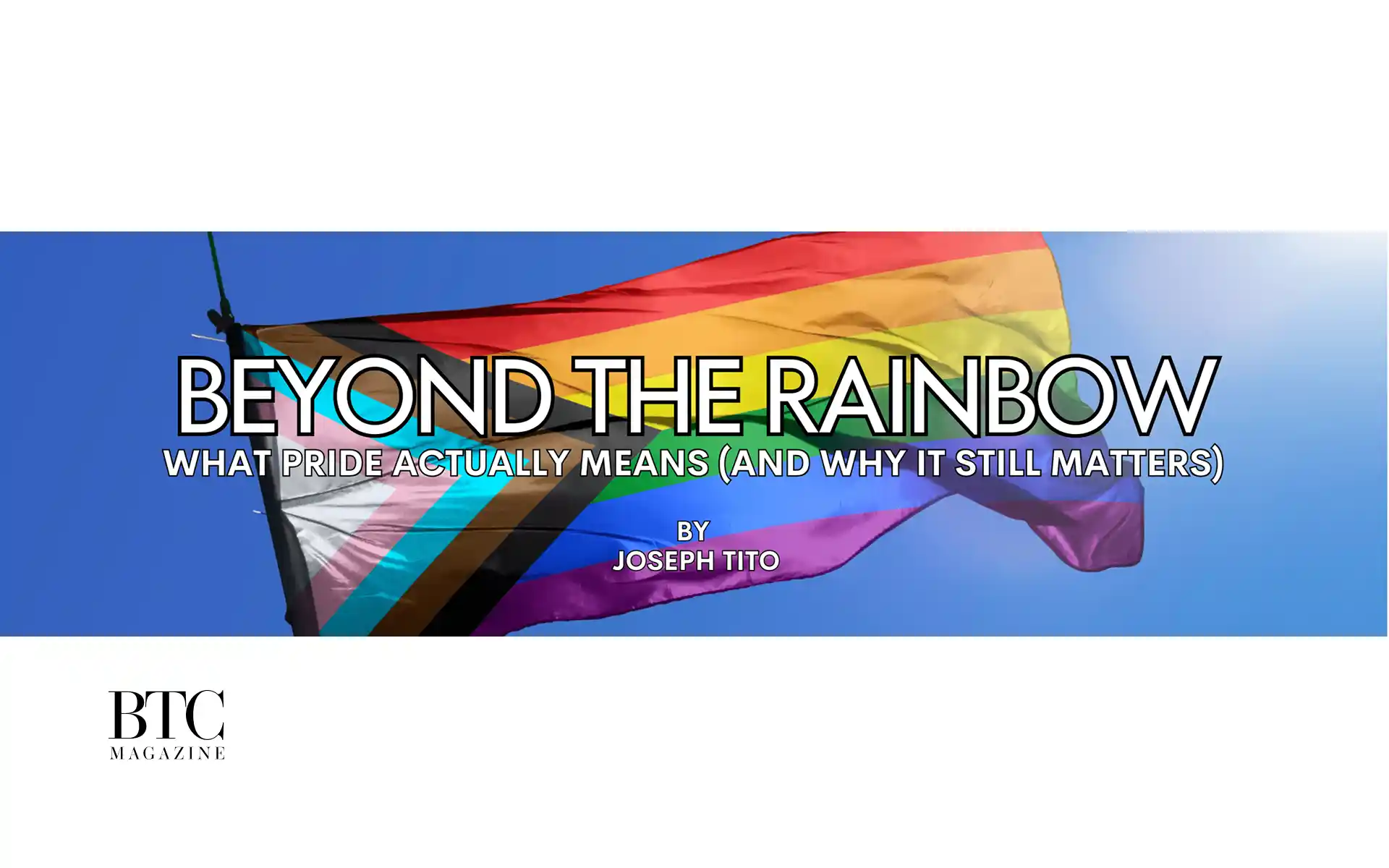
The rainbow flag was designed by Gilbert Baker in 1978, with each color having symbolic meaning (red for life, orange for healing, etc.)
The first official Pride march was held in New York City in 1970, one year after the Stonewall uprising
The Stonewall Inn is now a National Monument, designated by President Obama in 2016
In many countries, Pride marches are still met with violence and arrests
The acronym has evolved over time from "Gay Pride" to LGBT, LGBTQ, LGBTQ+, and various other iterations as communities strive for greater inclusion
Members only from here
You've reached the preview. Subscribe for the full article — plus every issue and subscriber perks.
7-day free trial, then from $3.99/mo. Cancel anytime.
Instant access · Cancel anytime
“I started reading for the fashion pieces, but the essays are what kept me coming back.”
Maya R. · Toronto reader
Keep exploring
Read the full story
7-day free trial · From $3.99/mo
Discover every article featured in our latest BTC issues, bringing the month's stories together in one place, so you can easily read and explore everything.
Read Now →Skin has no pronouns, and neither does great skincare. Discover clean beauty made for every skin type, age, and identity. Honest formulas, clear ingredients, and inclusive beauty that actually belongs to you.
Clean beauty for skin, not labels. Face mists, serums, moisturizers, and masks made for you, whoever you are.
Colour makeup and body care that work with your skin, not against it. Inclusive beauty, made honestly.
Beauty gifts and skincare gifts, curated into sets your favourite person will actually use and love.
You deserve stories that actually get you. A BTC magazine subscription unlocks unlimited access to in-depth, unfiltered articles, exclusive podcasts, and member perks you'll genuinely love. Try it free for seven days, then keep enjoying full access from just $3.99 a month. Cancel anytime, no pressure at all. Ready to go deeper?
7-day free trial, then from $3.99/mo. Cancel anytime.
.webp)

.webp)
Comments
No comments yet
No comments to show yet. Subscribe to join the conversation.
Log in or subscribe to comment on this article.