
Available on iOS & Android
Read BTC Anywhere
Carry the full magazine experience in your pocket — stories, podcasts, exclusive perks, and more. Download the free app today.
Carry the full magazine experience in your pocket — stories, podcasts, exclusive perks, and more. Download the free app today.
Listen, I get it. When someone mentions "cryptocurrency," your brain probably does that thing where it short-circuits like a Windows 95 computer trying to run TikTok. Same energy as when your teenager explains why they need $200 sneakers or when anyone under 25 tries to teach you a new app.
But here's the thing: I'm about as tech-savvy as a potato with anxiety, and even I figured this shit out. Sort of. Mostly. Look, nobody has it completely figured out, including the people who invented it, so we're all just winging it together.
Imagine if your money lived in the internet instead of your wallet, but instead of being controlled by banks who charge you $35 for buying a coffee when you're broke, it's controlled by... well, nobody and everybody at the same time. It's like a group project where everyone's both the slacker and the overachiever.
Cryptocurrency is digital money that exists on something called a "blockchain", which sounds fancy but is basically just a really, really long receipt that everyone can see but nobody can fake. Think of it as the world's most transparent and complicated e-transfer, except instead of splitting dinner, you're potentially making (or losing) actual money.
Bitcoin is the granddaddy of crypto, the one everyone's heard of, like the Jennifer Aniston of digital currency. Then there's Ethereum, which is like the Reese Witherspoon, versatile, smart, and probably going to age better than you think.
Back in January, I was that person rolling my eyes at crypto bros on Twitter (sorry, "X", I'm still not over that rebrand). You know the type: profile pics of laser-eyed monkeys, constantly tweeting about "diamond hands" and "going to the moon." I thought they were all either trust fund kids or people who peaked in high school math.
Then my friend Sarah, the same Sarah who convinced me to try hot yoga and eat kale chips, casually mentioned she'd made enough in crypto to pay for her kid's summer camp. Sarah, who still uses Internet Explorer and thinks "the cloud" is just weather, was out here making money in the digital wild west.
So I did what any rational adult does when faced with FOMO: I panic-researched for three days straight, fell down seventeen different Reddit rabbit holes, and then impulse-downloaded Coinbase at 2 AM while drinking wine and watching Love Island.
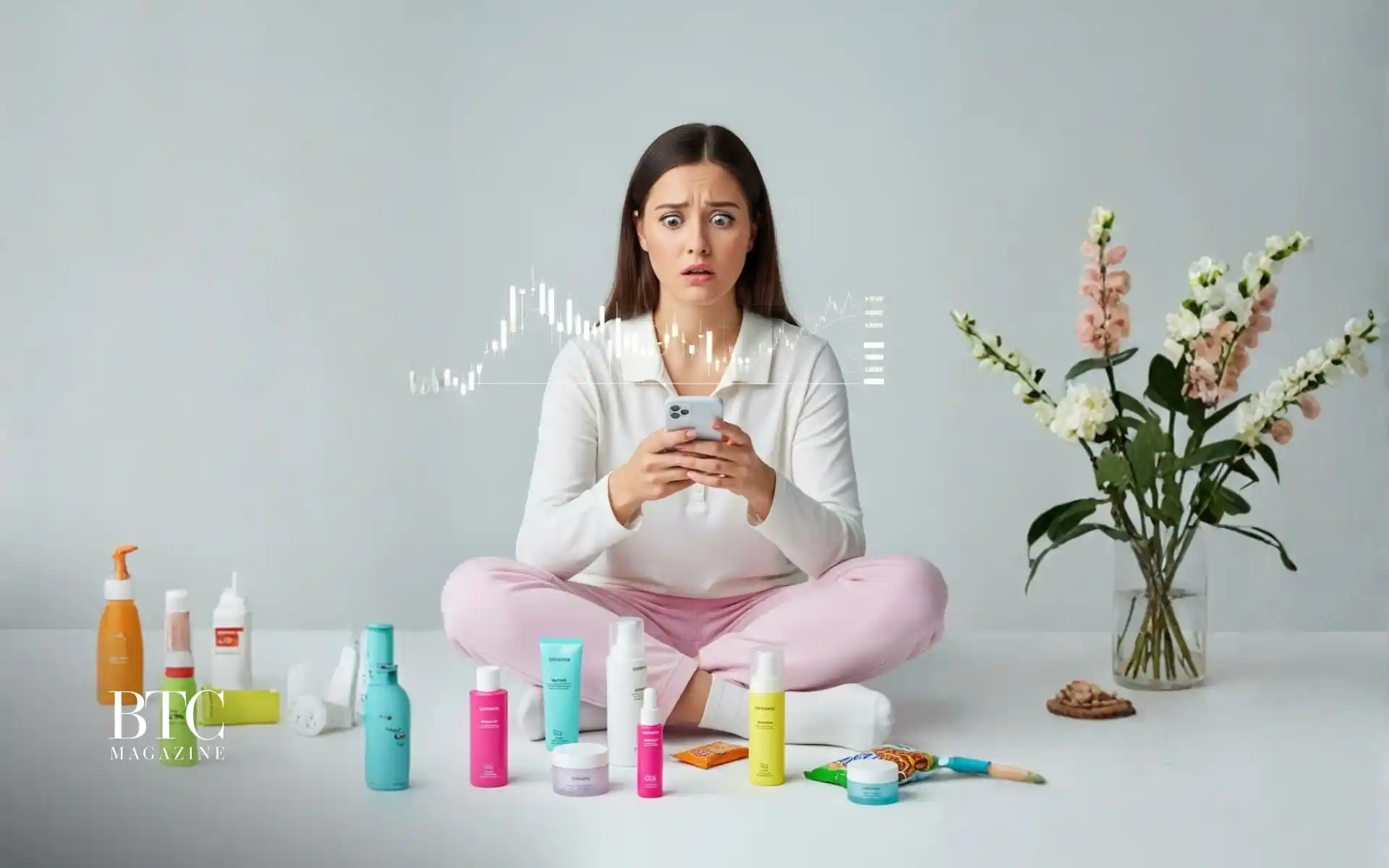
Here's the tea: since January, my little crypto experiment has actually grown. Not "quit your day job and buy a yacht" grown, but more like "hey, I can afford the good coffee this month" grown. And honestly? That's perfect for me.
I started small, like, embarrassingly small. We're talking the financial equivalent of dipping your toe in a kiddie pool while wearing water wings and a life vest. But that's exactly what you should do, because crypto can be as unpredictable as your period and twice as emotionally exhausting.
Some days my portfolio looks like it's thriving. Other days it looks like it needs therapy and a juice cleanse. The key is not checking it every five minutes like you're stalking an ex on Instagram (though let's be real, we all do both).
Look, I'm not saying crypto is going to solve all your problems. It's not going to fix your relationship with your mother or make your commute less soul-crushing. But it might help diversify your financial portfolio, which is adult-speak for "don't put all your eggs in one basket, especially if that basket is controlled by people who think charging you to access your own money is totally reasonable."
The thing about crypto is that it's still relatively new, which means we're all basically early adopters. Remember when having a cell phone made you look like a drug dealer? Or when only weirdos had email addresses? Yeah, we might be living through that moment again, except with money.
Plus, and hear me out on this: it's actually kind of fun. In a terrifying, "I have no idea what I'm doing but at least I'm doing something" way. It's like being on a roller coaster, but instead of screaming, you're just refreshing your phone and trying to understand what a "whale" is (spoiler: it's not the mammal).
If you're thinking about dipping your toes into this digital insanity, here's my completely unqualified but experientially based advice:
Start with Coinbase. I know, I know, everyone has opinions about which platform is "best," but Coinbase is like the Target of crypto exchanges. It's user-friendly, relatively trustworthy, and you won't feel like you need a computer science degree just to buy $20 worth of Bitcoin.
The interface actually makes sense, which is saying something in the crypto world where most things look like they were designed by aliens who learned about human behavior from watching infomercials. Plus, they have educational content that doesn't make you feel like you're failing a test you didn't know you were taking.
Start stupidly small. I'm talking like, money you would spend on overpriced coffee or impulse buys at Target. If losing it would stress you out, don't invest it. This isn't Vegas, but it's not a savings account either.
Don't try to time the market. You know how you can never predict when you're going to get your period, even with apps and careful tracking? Yeah, crypto is like that but with money. Just buy a little bit regularly and call it a day.
Ignore the noise. The crypto community can be... a lot. It's like CrossFit, veganism, and pyramid schemes had a baby and raised it on energy drinks and motivational posters. Take what's useful, ignore the rest, and definitely don't let anyone pressure you into buying something called "SafeMoonDogeCoin" or whatever.
Here's what nobody tells you about crypto: it's equal parts boring and terrifying. Most of the time, nothing happens. Your Bitcoin just sits there, being Bitcoin, occasionally going up or down like your motivation on a Monday morning. Then suddenly, something dramatic happens and everyone loses their minds for a week before things go back to being boring again.
It's also weirdly empowering to have money that exists outside the traditional banking system. Every time I get charged a "convenience fee" for paying my bills online (the audacity!), I think about my little crypto portfolio just existing peacefully in the digital ether, growing slowly but surely.
Will crypto make you rich? Probably not quickly, and definitely not without some stress-induced gray hairs. But might it be a smart addition to your financial strategy? Maybe. Could it be fun in a "I'm adulting in the 21st century" kind of way? Absolutely.
So here's my completely biased, mildly unhinged recommendation: download Coinbase, verify your identity (yes, it's annoying, but so is every other adult responsibility), and buy like $25 worth of Bitcoin or Ethereum. Then forget about it for a month.
Don't check it every day. Don't join seventeen different Discord servers. Don't start calling yourself a "crypto investor" on LinkedIn. Just let it sit there and do its thing while you go about your regularly scheduled chaos.
The worst thing that happens? You lose the price of a nice dinner and have a story to tell at parties. The best thing that happens? You get to smugly tell people you were into crypto before it was cool, assuming it ever becomes universally cool and not just financially beneficial.
Either way, you'll be ahead of everyone who's still scared of anything more complicated than their savings account.
Welcome to the future, babes. It's weird here, but at least we're all confused together.
Ready to start your own controlled financial chaos? Download Coinbase (https://coinbase.com/join/R67WJ9L?src=referral-link) and join the ranks of people who understand just enough about crypto to be dangerous. Your future self (and your portfolio) will thank you. Or curse you. Either way, it'll be an adventure.
Disclaimer: This is not financial advice, just one person's messy journey shared for entertainment purposes. Between the Covers and its contributors are not responsible for your financial decisions, crypto gains, losses, or the inevitable stress-eating that may result from checking your portfolio too often. Invest responsibly, start small, and maybe talk to an actual financial advisor if you're planning to bet the farm on digital coins. We're just here for the stories and the solidarity.
Members only from here
You've reached the preview. Subscribe for the full article — plus every issue and subscriber perks.
7-day free trial, then from $3.99/mo. Cancel anytime.
Instant access · Cancel anytime
“I started reading for the fashion pieces, but the essays are what kept me coming back.”
Maya R. · Toronto reader
Cryptocurrency is digital money that exists on a blockchain, which functions like a transparent, unfakeable public receipt of every transaction. Unlike bank accounts, it operates without a central authority, meaning no single institution controls it. Bitcoin is the original and best-known example, while Ethereum offers a broader set of applications beyond simple currency exchange.
The essay takes a candid approach: nobody has it completely figured out, including the people who invented it. It's treated here as a volatile but real asset class that requires understanding before committing money. The article recommends platforms like Coinbase as entry points and treats skepticism as healthy rather than a sign of being behind.
The essay uses pop culture comparisons to make this accessible: Bitcoin is the Jennifer Aniston of crypto, the one everyone knows. Ethereum is more like Reese Witherspoon, versatile, smart, and likely to age well in ways people underestimate. Bitcoin functions primarily as a store of value while Ethereum powers a broader ecosystem of applications.
Keep exploring
Read the full story
7-day free trial · From $3.99/mo
Discover every article featured in our latest BTC issues, bringing the month's stories together in one place, so you can easily read and explore everything.
Read Now →Skin has no pronouns, and neither does great skincare. Discover clean beauty made for every skin type, age, and identity. Honest formulas, clear ingredients, and inclusive beauty that actually belongs to you.
Clean beauty for skin, not labels. Face mists, serums, moisturizers, and masks made for you, whoever you are.
Colour makeup and body care that work with your skin, not against it. Inclusive beauty, made honestly.
Beauty gifts and skincare gifts, curated into sets your favourite person will actually use and love.
You deserve stories that actually get you. A BTC magazine subscription unlocks unlimited access to in-depth, unfiltered articles, exclusive podcasts, and member perks you'll genuinely love. Try it free for seven days, then keep enjoying full access from just $3.99 a month. Cancel anytime, no pressure at all. Ready to go deeper?
7-day free trial, then from $3.99/mo. Cancel anytime.

.webp)
Comments
No comments yet
No comments to show yet. Subscribe to join the conversation.
Log in or subscribe to comment on this article.