
Available on iOS & Android
Read BTC Anywhere
Carry the full magazine experience in your pocket — stories, podcasts, exclusive perks, and more. Download the free app today.
Carry the full magazine experience in your pocket — stories, podcasts, exclusive perks, and more. Download the free app today.
"Detachment is a good thing. When you release things, it's because you're allowing yourself to carry more. Sometimes carrying it all isn't actually the best way to get what you want."
The triangle changed everything.
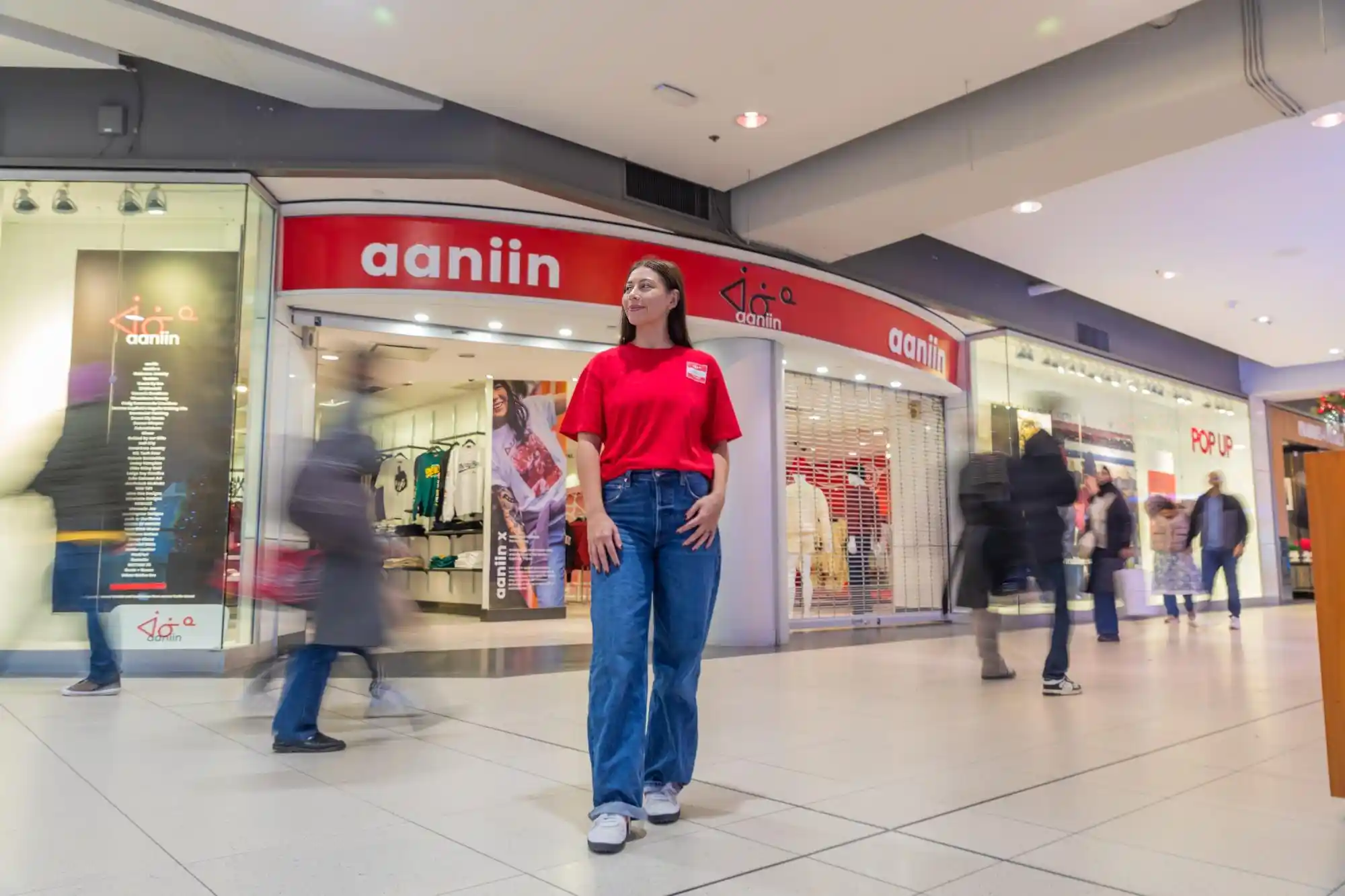
Walking through downtown Toronto in June 2021, Chelsee Pettit thought she saw someone wearing Indigenous syllabics on their shirt, those distinctive shapes that form the writing system for many Indigenous languages across Canada. For the first time in her life living in the city, she felt represented.
"I was shocked to see Indigenous languages being worn," she tells me over Zoom, her voice carrying the weight of someone who's built something from nothing. "I thought, 'Holy, somebody thinks Indigenous languages are as cool as Korean or Japanese across a shirt.'"
But as she got closer, reality hit. It was just a triangle.
"I felt disappointed. But I'm a very solution-oriented person. Immediately I was like, 'I need to become an Indigenous Nike.'"
Three days later, aaniin was born. That first week? $3,000 in sales from a crappy Shopify site, zero followers, and a story posted on Instagram about a triangle that wasn't what it seemed.
The $70K Problem
But let's back up, because Chelsee's origin story isn't the sanitized entrepreneur fairy tale you're used to. At 20, she was $70,000 in debt, a college dropout working retail for $38,000 a year with a credit score of 200.
The wake-up call came when she moved in with her boyfriend (now ex-husband). "He looks over at me and goes, 'So how much debt do you have?' I was like 'I don't know.'" After adding up credit cards, loans, and that car she thought she owned, the number was staggering.
"He was like, 'You're insane. You make $14 an hour and dropped out of several college programs. You're not paying that off before you're 50.'"
Challenge accepted. Chelsee took a second job as a hotel night auditor, working three nights a week while managing a Sunglass Hut during the day, destroying her sleep schedule and nearly her sanity. In six months, she paid off $10,000. "I was like, 'I'm going to have a heart attack or fall asleep driving home.' I need to figure something else out."
A job at Bond Look, a Montreal-based eyewear startup, changed her trajectory. She increased store sales by 46% in six months and met Sophie Belange, a female entrepreneur who showed her what was possible. "That was the first time I ever experienced a female entrepreneur in my entire life."
By 25, Chelsee was debt-free. By 26, she was building an empire from a triangle that wasn't there.
What makes aaniin different isn't just the Indigenous languages emblazoned across streetwear, it's the tiny QR codes tucked inside every piece. The idea came from her white mother asking, "Can I wear that? I don't know how to pronounce it."
"I was like, 'It's a hat. You put it on your head. Why wouldn't you be able to wear this hat?'" But she understood. The QR codes solve everything: they educate without requiring Indigenous people to constantly play teacher, and they let non-Indigenous people engage authentically without fear of getting it wrong.
"Indigenous people don't have to spend time educating other people about our languages. It's just self-study, and you can pass it on."
It's brilliant, actually. Cultural appreciation facilitated by technology, removing barriers for everyone involved.
The Hidden Cost of Being First
What the success stories don't tell you is that being first is exhausting. Over four years, aaniin has generated over $2 million in revenue, but half of that has gone to supporting other Indigenous businesses. Chelsee spent years doing everything for free: business consulting, marketing advice, mentoring.
"For four years I was doing everything for free because I figured out how to make a hat that doesn't fall apart for $45, and people don't question why."
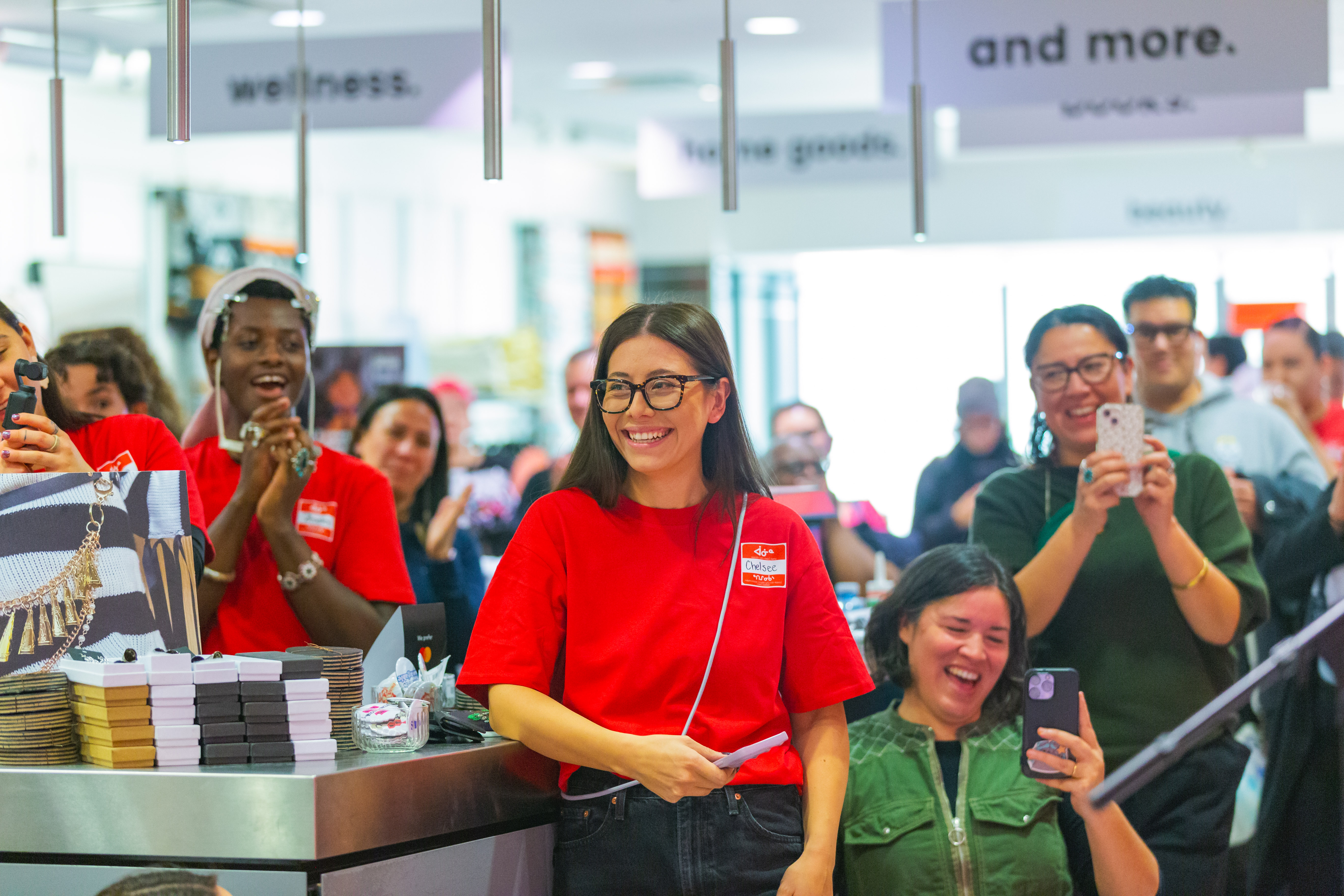
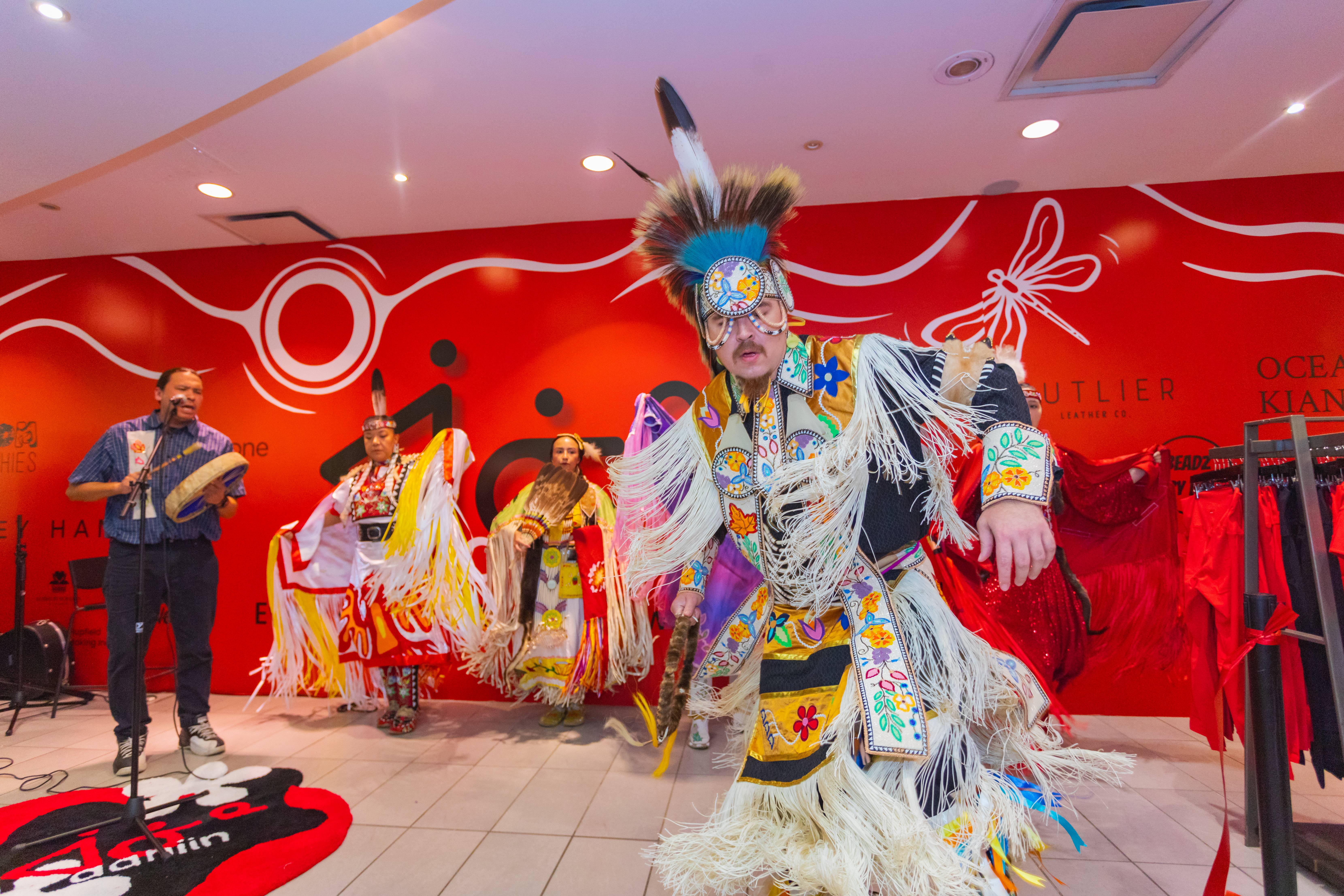
The weight of representation is real. When you're the first Indigenous retailer in downtown Toronto's for-profit space, when you're housing 40+ Indigenous brands at the Eaton Centre, when you're literally creating space that never existed, you carry more than your own success.
"We have such a high standard for ourselves to represent our community in thoughtful and intentional ways," she explains. "But we also do things the way we do them because we have no other options sometimes."
Those other options? They often don't exist. When Chelsee
wanted to curate Indigenous brands for her department store pop-up, she couldn't just order from a catalog. "There's like five brands that are actually retail-ready. Everybody else is very small artisan brands where I had to pick up the phone, jump on weekly calls, making sure they don't feel confident in their product."
She became business therapist, financial backer, and cheerleader while building her own brand. "My brand is trying to support 50 other Indigenous brands while I'm also just trying to make it through day-to-day in my own brand."
The Bear's Lair Meltdown
The call came September 1st, 2023: Vancouver, September 11th, film Bear's Lair. Chelsee's response? "Nope. I'm not going."
Orange Shirt Day was September 30th. She had a $25,000 inventory order coming from China, her first major investment ever, plus a Truth and Reconciliation event, plus a business development day with Shopify, plus five new interns starting.
They convinced her to go. Then her orange shirts got stuck at the border.
"I'm about to board the plane, and I'm like, 'I'm not boarding this plane. I'm going home.'" Her husband's response: "The shirts are going to be late or on time no matter what you do. You're not driving the UPS truck. Get on the fucking plane."
She wrote her first pitch ever on the plane, recorded it on voice memo, then duplicated it 700 times in CapCut to listen on repeat for three days straight. "I gave myself a migraine. I was throwing up the day before."
On camera, she forgot everything and had to read from her script. She won anyway. The second episode was worse, they took her paper away. She looked at the ceiling every time she forgot something, then back down to continue.
For the finals? She stopped preparing entirely. "I listened to Taylor Swift's 'The Man' on repeat for three hours straight." She crushed it. "Her songs have spells in them for sure."
$100,000 later, validation finally came. But it took Taylor Swift's magic and three rounds of public vulnerability to get there.
The Future Is Finance
Here's where Chelsee's story gets really interesting. She's done chasing individual success. "I know that I've taken this business as far as I humanly possibly can."
The next phase isn't about selling more hats, it's about becoming what she calls "Indigenous BlackRock." Impact investing, private equity, venture capital funding for Indigenous businesses.
"If we take investment from non-Indigenous contributors, we're going to be colonized out of our own business essentially. It's happened quite a few times with other Indigenous brands."
Her solution? Build the financial infrastructure herself. "My goal is to become like Indigenous BlackRock. There's not going to be change unless we're actually creating these financial structures ourselves."
It's the kind of systems thinking that goes way beyond feel-good entrepreneurship stories. Chelsee isn't just building a brand, she's building the foundation for others to build on, creating the structures that should have existed all along.
The Last Page
When I ask what would be written on the last page if aaniin were a book, she doesn't hesitate: "Detachment is a good thing. When you release things, it's because you're allowing yourself to carry more. Sometimes carrying it all isn't actually the best way to get what you want."
It's advice that applies to more than business. In a world that tells us to hustle harder, lean in more, never give up, Chelsee's learned that sometimes the most radical thing you can do is let go, of the perfect pitch, of doing everything for free, of carrying the weight of representation alone.
The triangle that started it all wasn't real. But everything Chelsee built from that moment of disappointment is. And she's just getting started.
aaniin continues to operate online and through pop-up locations. Chelsee is currently focused on developing Indigenous-led financial structures and investment opportunities.
Confidence is Everything.
Smooth skin helps you feel it.
Effortless confidence starts with the skin you’re in. Learn why, at Freedom, you see real results. Buy 5 laser sessions and receive 3 FREE when you mention BTC. Offer valid until Oct 31, 2025. Not valid with any other offers.
Members only from here
You've reached the preview. Subscribe for the full article — plus every issue and subscriber perks.
7-day free trial, then from $3.99/mo. Cancel anytime.
Instant access · Cancel anytime
“I started reading for the fashion pieces, but the essays are what kept me coming back.”
Maya R. · Toronto reader
Chelsee Pettit is the founder of aaniin, an Indigenous fashion and language brand she started in June 2021 after seeing what she thought was Indigenous syllabics on a stranger's shirt in Toronto, only to realize it was just a triangle. That disappointment became immediate business inspiration. The first week produced $3,000 in sales from a rough Shopify site with no followers.
At 20, Chelsee had $70,000 in debt, a credit score of 200, and was working retail for $38,000 a year after dropping out of several college programs. Her partner's direct question about how much debt she had forced her to add it all up for the first time. That reckoning became the foundation for the financial discipline that eventually built a nationally recognized brand.
Aaniin is a greeting in Anishinaabemowin and reflects the brand's core mission: making Indigenous languages visible, wearable, and desirable in the way Korean or Japanese text has become in streetwear. Chelsee describes wanting to become an Indigenous Nike, which means not just selling clothes but making an entire culture's language a source of pride rather than a marker of otherness.
Keep exploring
Read the full story
7-day free trial · From $3.99/mo
Discover every article featured in our latest BTC issues, bringing the month's stories together in one place, so you can easily read and explore everything.
Read Now →Skin has no pronouns, and neither does great skincare. Discover clean beauty made for every skin type, age, and identity. Honest formulas, clear ingredients, and inclusive beauty that actually belongs to you.
Clean beauty for skin, not labels. Face mists, serums, moisturizers, and masks made for you, whoever you are.
Colour makeup and body care that work with your skin, not against it. Inclusive beauty, made honestly.
Beauty gifts and skincare gifts, curated into sets your favourite person will actually use and love.
You deserve stories that actually get you. A BTC magazine subscription unlocks unlimited access to in-depth, unfiltered articles, exclusive podcasts, and member perks you'll genuinely love. Try it free for seven days, then keep enjoying full access from just $3.99 a month. Cancel anytime, no pressure at all. Ready to go deeper?
7-day free trial, then from $3.99/mo. Cancel anytime.
Comments
No comments yet
No comments to show yet. Subscribe to join the conversation.
Log in or subscribe to comment on this article.