
Available on iOS & Android
Read BTC Anywhere
Carry the full magazine experience in your pocket — stories, podcasts, exclusive perks, and more. Download the free app today.
Carry the full magazine experience in your pocket — stories, podcasts, exclusive perks, and more. Download the free app today.
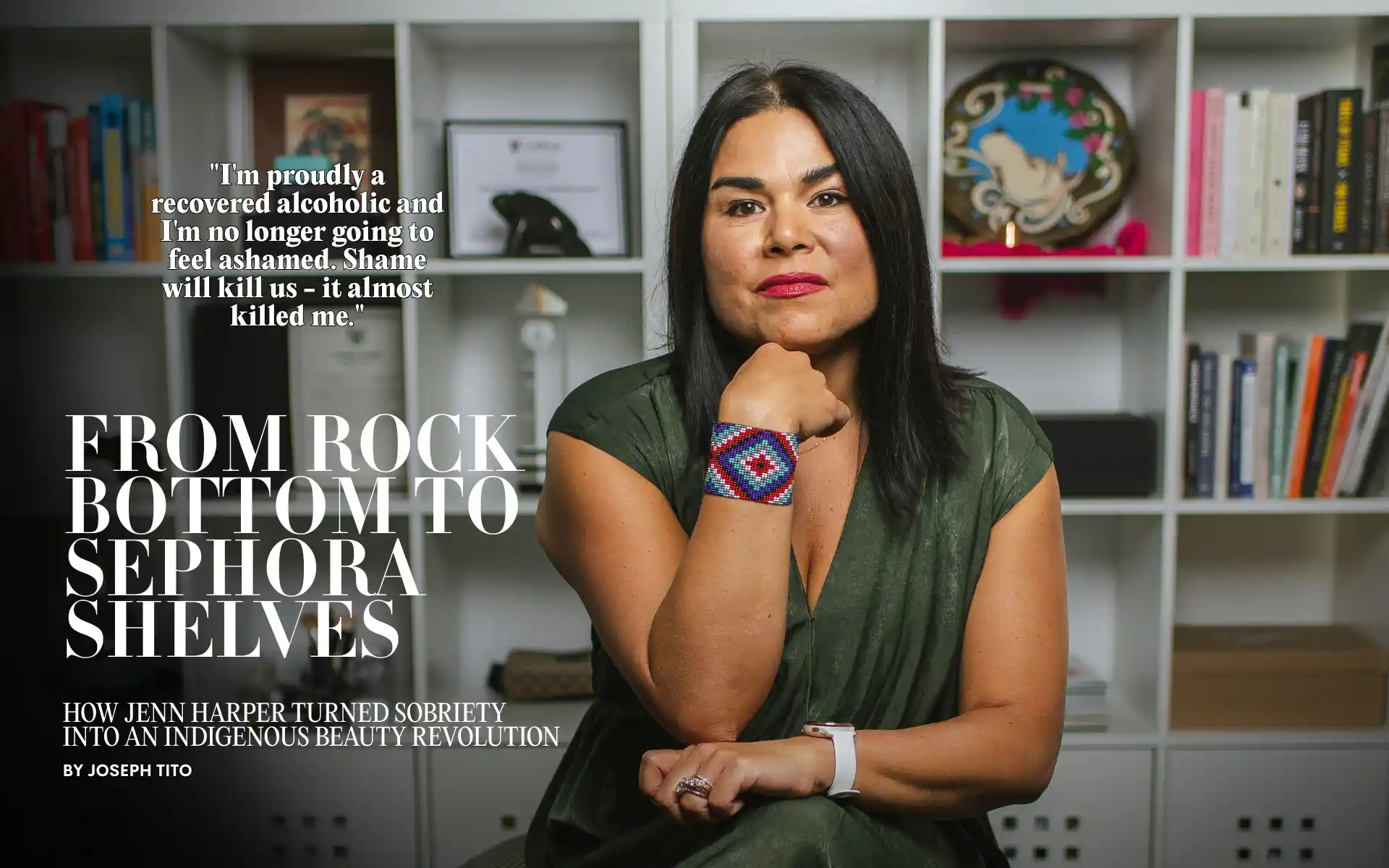
"I'm proudly a recovered alcoholic and I'm no longer going to feel ashamed. Shame will kill us - it almost killed me."
Jenn Harper had been selling seafood for over a decade when three little Indigenous girls covered in lip gloss changed everything. The dream came in January 2015, just two months into her sobriety, brown skin, rosy cheeks, giggling and laughing while covered in colorful gloss. When she woke up, she wrote down what would become the business plan for Cheekbone Beauty.
"It was so real to me that building a cosmetics company was the next thing on my path," Harper reflects. "It's crazy when I think about it now, I'm embarrassed about how much I didn't know about this industry."
What she didn't know could fill a warehouse: product development, supply chains, ingredients, retail merchandising, the crushing competitiveness of beauty. What she did know was this: a brand representing Indigenous people deserved to exist in the world.
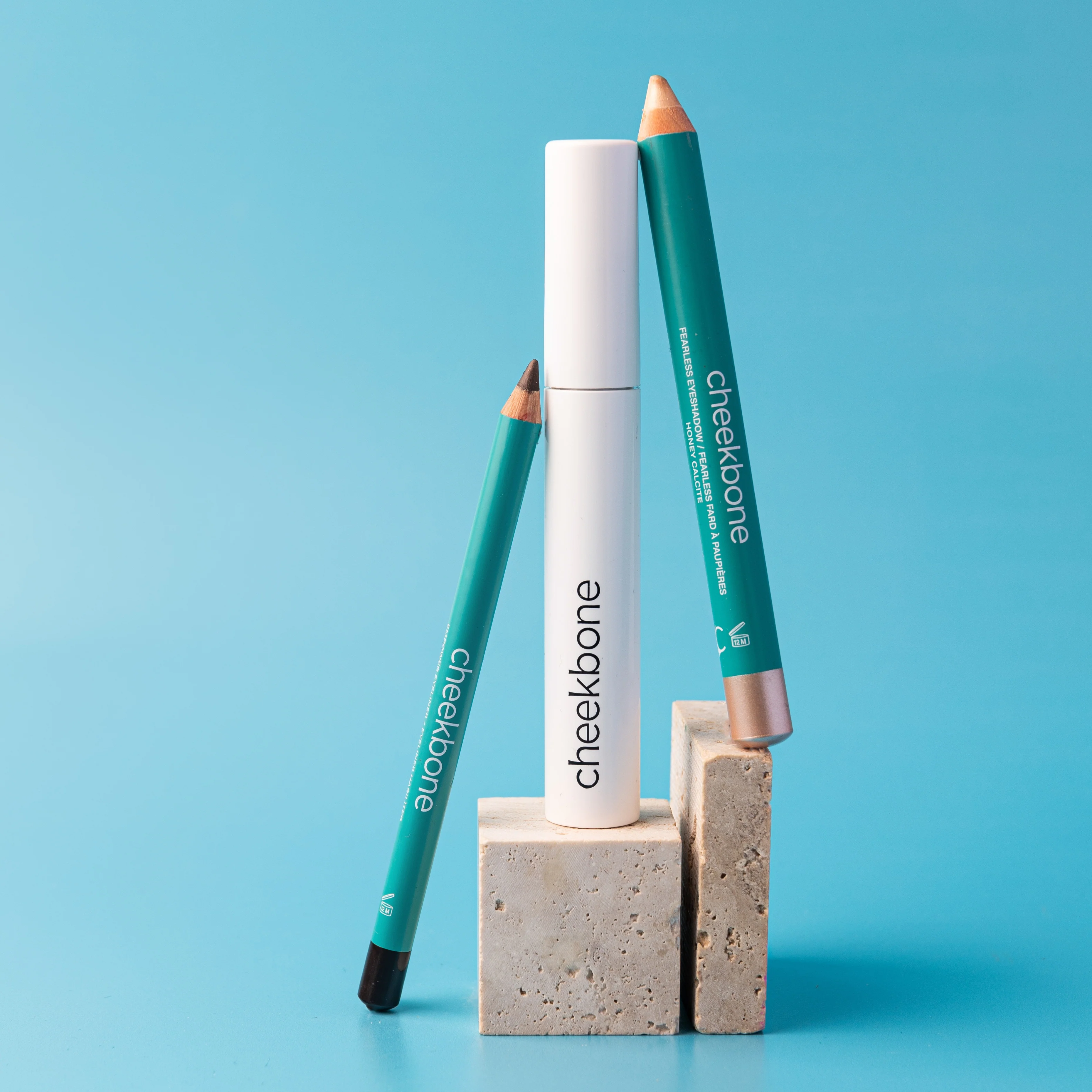
Ten years later, that naive conviction has built something unprecedented, the first B Corp certified Indigenous beauty brand to hit Sephora shelves, a company that's donated over $250,000 to Indigenous communities, and a new category Harper calls "Indigenous Beauty" that puts sustainability and cultural values at its core.
But the real revolution? How Harper transformed the same addictive patterns that nearly destroyed her life into the obsessive focus that built an empire.
When Shame Nearly Killed Her
"I'm proudly a recovered alcoholic, and I'm no longer going to feel ashamed," Harper says with the directness that's become her trademark. "Shame will kill us, it almost killed me."
Harper's battle with alcoholism lasted years, marked by rehab attempts, relapses, and a marriage hanging by a thread. In 2014, her husband delivered an ultimatum: get sober or he was leaving. It was the first time in their marriage he'd drawn that line.
"I had this moment of surrender. I had to believe truly that I could get well," she explains. The timing wasn't coincidental, 2015 was also when Canada's Truth and Reconciliation Commission released its report on residential schools, finally giving Harper language for the generational trauma that had shaped her family.
"I used to believe I was just this person who comes from a completely dysfunctional family, we're just screwed up people," she admits. "Then I learned that this was systematically designed to take down a culture."
Her grandmother had been taken from their community at six years old, forced into residential school until sixteen, beaten for speaking their language. Suddenly, Harper's family dysfunction had context, and a path to healing.
Replacing One Addiction With Another
Traditional recovery wisdom warns against substituting addictions, but Harper had a different plan. "I became obsessed with building this business, and maybe as an addict with an addict's brain, I'll never be fully healed from that in this life. But how can I use that power of obsession for doing something good versus destroying my life?"
She admits the approach isn't typical AA advice, but it worked. Harper channeled her addictive patterns into something constructive: reading over a hundred books on entrepreneurship and Indigenous culture, diving deep into formulations and supply chains, obsessing over every detail of building a sustainable beauty company.
"That you can climb any mountain and get to the top," Harper says when asked what sobriety taught her about business. "You really can't see it unless you can see it, that line is so important for people from BIPOC communities. If you didn't see yourself represented out there, how are you supposed to think you can do those things?"
Building Indigenous Beauty From Nothing
What Harper calls "Indigenous Beauty" isn't just marketing, it's a fundamental reimagining of how beauty products should be made. Where Korean beauty focuses on skincare and French beauty means perfume and red lipstick, Indigenous beauty centers sustainability and connection to the earth.
"Indigenous people have truly lived and breathed sustainability since the beginning of time," Harper explains. "We want to add that into how we make and create our products."
At Cheekbone, that means formulas that actually biodegrade back into ecosystems, sustainably sourced packaging, and transparency
about every ingredient. Harper spent years studying formulations to replace conventional ingredients with biodegradable alternatives, swapping propylene glycol for propendol, using only post-consumer recycled plastic, creating products that can serve multiple purposes.
"The truth is, true sustainability means we buy nothing and use what we have," Harper acknowledges. "We're still a consumer-based business. But can we do it so that the choice someone's making is a better choice they can feel good about?"
The Cost of Representation
Harper's drive for visibility became even more urgent after losing her brother BJ to suicide. "When you lose someone to suicide, you really spend a lot of time thinking about the what-ifs," she says quietly. "What I learned from my brother is that he really felt represented in these last few years. He would send me messages about Indigenous people on red carpets or athletes coming up."
Those messages became proof of representation's power, and its absence's danger. Harper knows the statistics: Indigenous communities face suicide rates far above national averages, often linked to disconnection and lack of belonging.
"You really can't be it unless you can see it," Harper repeats. "For me, being able to represent our communities and help them see that entrepreneurship is an option, if I can figure it out and I wasn't a great student, I didn't have a university degree, if I can do this, they can too."
Revolution, Not Activism
Harper's approach to change differs from traditional activism. "I feel like going and yelling at someone with a sign is never going to change their heart," she explains. "We need activists for many things, but I believe the way I love to connect with people is: can we change people's hearts?"
Instead of protests, Harper builds. Cheekbone's scholarship fund has deployed 30 scholarships since 2021. Two percent of all revenue goes to Indigenous education initiatives year-round, with special Orange Shirt Day campaigns raising additional funds.
"We use the system," Harper says of their Orange Shirt Day strategy. "People are
thinking about those things on that day, so of course we're using it. The algorithm of the world works on days now, if you're not speaking to the big things happening, no one cares because no one's going to see it."
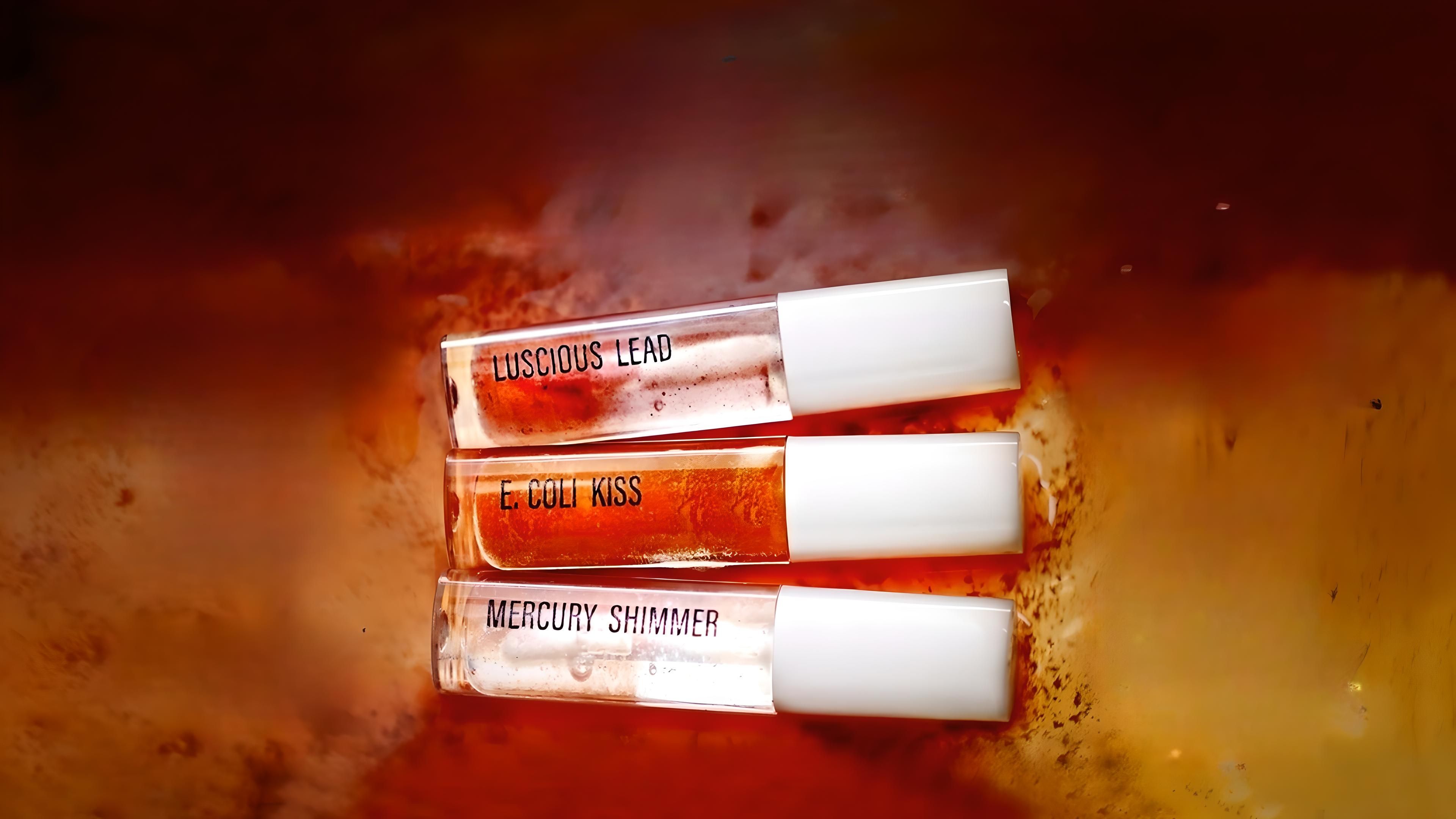
The approach extends to retail partnerships. When Sephora committed to Harper's "Glossed Over" campaign, featuring lip glosses named "Luscious Lead" and "E. Coli Kiss" to highlight water crises in Indigenous communities, it gave profits from Cheekbone sales to water treatment organizations.
"Sephora is really great, they take risks in that way," Harper notes. "They're truly the heroes in that story because they used their platform, and that's not easy to do on a bigger scale."
The Real Beauty Industry
Harper envisions an industry transformation that goes beyond Indigenous representation. "Real people, no more editorial stuff," she says when asked what would make beauty actually beautiful. "We deserve to see real people wearing the products with real skin imperfections, acne, textured skin, hair on their face, let's just be real about it."
It's a radical vision in an industry built on manufactured insecurity, but Harper's betting consumers are ready. As the first B Corp certified cosmetic brand in Sephora, Cheekbone legally prioritizes people and planet over profit, paying living wages, providing mental health benefits, and taking company-wide mental health weeks.
"Everyone at Cheekbone makes over a living wage for the area of the world they live in," Harper explains. "We take a whole week off every summer as an entire business so that it's a real mental health break for the entire company."
What Her Grandmother Would Think
When asked what her grandmother would think of seeing Cheekbone in Sephora, Harper pauses. "I think she would be proud. We're a humble group of people, a humble nation. We don't do the bragging thing, it's cultural. But there would be a lot of joy and happiness because I'm her granddaughter."
That humility runs through everything Harper builds. Despite Cheekbone's success, Sephora shelves, B Corp certification, six-figure donations, she insists they're just getting started.
"I literally feel like we're just getting started," she says of the ten-year journey. "Over the last two years is finally when I feel like we've built something that's going to have value and matter."
The Revolution Continues
Harper's vision extends beyond Cheekbone to building an Indigenous beauty conglomerate, acquiring skincare brands, hair care lines, creating an entire ecosystem centered on Indigenous values and sustainable practices.“Cheekbone pioneered a category we call Indigenous Beauty," she explains. "What we intend to do is build this with that long view in mind."For women watching Harper's journey, especially those with their own healing to do, her message is clear: "I am no longer going to feel ashamed. If we've made past mistakes, big ones or small ones, you have to remove that shame part of it. Anyone can turn their lives around at any given moment."
It's advice born from experience, spoken by someone who turned rock bottom into revolutionary business, addiction into empire-building, and personal healing into community transformation.
"If your heart's in something, there's nothing that can stop you from reaching that goal," Harper concludes. "I have regrets, many, many regrets. But shame will kill us. And I refuse to let shame win."
Harper's story represents a new generation of Indigenous entrepreneurs building businesses that honor their heritage while challenging industry standards. As Orange Shirt Day approaches this September, her work reminds us that real reconciliation happens not through performative gestures, but through sustained action, authentic representation, and the radical act of building something beautiful from the ground up.
When Jenn Harper talks about changing hearts instead of holding signs, she's describing a partnership that puts real money behind Indigenous education. For four years, Cheekbone Beauty has worked with Indspire, Canada's largest Indigenous-led registered charity, transforming lip gloss sales into life-changing scholarships.
"They're the one that we do our scholarship fund in collaboration with," Harper explains. "They're a not-for-profit, we're a for-profit business, so we get them to do all of our scholarship fund work."
The partnership makes perfect sense: Harper brings platform and profits, while Indspire brings three decades of experience. Since 1996, Indspire has distributed over $200 million in scholarships to more than 54,000 Indigenous students across Canada.
The collaboration has deployed 30 scholarships since 2021, with Cheekbone contributing 2% of all revenue year-round to their "For Future Generations Scholarship Fund." During Orange Shirt Day campaigns, that jumps to 100% of profits after operational costs.
"This year will be the fourth year," Harper notes. "The people at Cheekbone love their jobs because everything we do is about supporting and giving back to the community."
What makes this powerful isn't just money, it's visibility. Harper's Orange Shirt Day campaigns educate consumers about funding gaps, systemic barriers, and why Indigenous education matters. Her customers learn while they shop.
"Education is powerful," Harper emphasizes. "Whatever path a young person can choose, it's going to help."
Indspire's approach aligns with Harper's philosophy. Rather than charity creating dependency, they provide tools for self-determination. Scholarships support everything from trades programs to PhD studies, recognizing that Indigenous communities need leaders in every field.
Harper's story, building a multi-million dollar company without a university degree, proves success comes in many forms. But systemic change requires Indigenous people in boardrooms, courtrooms, research labs, and government offices.
"Meeting people that have been impacted, they're a beautiful organization, and people should be supporting them in every which way they can," Harper says.
The partnership creates a feedback loop: Cheekbone's success generates scholarship funding, which creates Indigenous graduates, who become role models for the next generation, the representation Harper wishes she'd had growing up ashamed of her identity.
This isn't charity for charity's sake. Harper sees education funding as business strategy, community building, and cultural preservation. Every scholarship recipient represents potential future leadership and entrepreneurship.
"It's all about what are we doing here for the next generations," Harper explains. "That's part of our complete ethos as a brand."
As Cheekbone grows into an Indigenous beauty conglomerate, the Indspire partnership ensures success lifts the entire community. It's capitalism with conscience, business as resistance, and proof that revolution can happen one scholarship at a time.
Members only from here
You've reached the preview. Subscribe for the full article — plus every issue and subscriber perks.
7-day free trial, then from $3.99/mo. Cancel anytime.
Instant access · Cancel anytime
“I started reading for the fashion pieces, but the essays are what kept me coming back.”
Maya R. · Toronto reader
Jenn Harper is the founder of Cheekbone Beauty, the first B Corp certified Indigenous beauty brand to reach Sephora shelves, and a woman who built an industry she knew nothing about because a dream in early sobriety told her it was the next thing on her path. The dream showed three Indigenous girls covered in colorful lip gloss, and she woke up and wrote the business plan.
Harper was a decade-long alcoholic whose recovery in 2015 coincided with the birth of Cheekbone Beauty. She describes transforming the same addictive patterns that nearly destroyed her into the obsessive focus that built an empire. The shame that almost killed her became the conviction behind a brand built specifically to make Indigenous people visible in an industry that had ignored them.
Indigenous Beauty as Jenn Harper defines it centers sustainability, cultural values, and authentic representation rather than performance of identity. Cheekbone has donated over $250,000 to Indigenous communities and operates as a B Corp, meaning its commitment to social and environmental impact is legally binding rather than marketing language.
Harper speaks publicly about her alcoholism and recovery specifically because shame silences people into worse choices. She credits her willingness to name her addiction without apology as part of what allowed her to build Cheekbone. Her story is a direct argument that removing shame from struggle is not weakness but one of the most powerful things a founder can do.
Keep exploring
Read the full story
7-day free trial · From $3.99/mo
Discover every article featured in our latest BTC issues, bringing the month's stories together in one place, so you can easily read and explore everything.
Read Now →Skin has no pronouns, and neither does great skincare. Discover clean beauty made for every skin type, age, and identity. Honest formulas, clear ingredients, and inclusive beauty that actually belongs to you.
Clean beauty for skin, not labels. Face mists, serums, moisturizers, and masks made for you, whoever you are.
Colour makeup and body care that work with your skin, not against it. Inclusive beauty, made honestly.
Beauty gifts and skincare gifts, curated into sets your favourite person will actually use and love.
You deserve stories that actually get you. A BTC magazine subscription unlocks unlimited access to in-depth, unfiltered articles, exclusive podcasts, and member perks you'll genuinely love. Try it free for seven days, then keep enjoying full access from just $3.99 a month. Cancel anytime, no pressure at all. Ready to go deeper?
7-day free trial, then from $3.99/mo. Cancel anytime.
Comments
No comments yet
No comments to show yet. Subscribe to join the conversation.
Log in or subscribe to comment on this article.